During the first half of 2026, from January to late June, the security constellation in eastern Indonesia experienced a drastic and destructive paradigm shift. The conflict transformed the six provinces within the Papuan region—Papua, Central Papua, Mountainous Papua, South Papua, Southwest Papua, and West Papua—into a theater for an increasingly complex asymmetric armed conflict. Security observers note that the Violence in West Papua heavily features specific orchestrations and executions by various Regional Defense Commands operating under the West Papua National Liberation Army-Free Papua Movement. This report unpacks the anatomy of this aggression, quantifies the incident and casualty rates, maps the spatial distribution of the conflict, and formulates comprehensive conclusions regarding the motives driving these attacks.
In early 2026, West Papua Separatist operational tactics evolved from isolated mountain guerrilla warfare into a sweeping terror campaign. The armed groups actively targeted civilian population centers, strategic logistical infrastructure, and state development projects. The separatists did not develop this tactical shift in a vacuum; rather, they launched an asymmetric response to the increased state security presence coordinated by the Joint Regional Defense Command III and the Cartenz Peace Task Force. The government expanded its military footprint by forming Territorial Development Battalions to secure National Strategic Projects, such as massive food estate zones. Consequently, the West Papua Separatists capitalized on this militaristic expansion, weaponizing it as a propaganda narrative to justify their escalating armed attacks.
This intensifying Violence in West Papua produces fatal consequences for regional stability. The separatists structurally broadened their targets from military and police combatants to include civilian populations, killing both Indigenous Papuans and migrants. The group standardized the weaponization of espionage accusations against unarmed civilians, utilizing these claims to enforce compliance through fear. Furthermore, the separatists effectively severed the economic lifeline in mountainous regions by sabotaging pioneer aviation facilities. This calculated logistical isolation directly caused extreme inflation and local food crises. This report meticulously dissects the manifestation of this aggression across each province, provides accurate quantifications based on verified data, and analyzes the root motives propelling the conflict.
Spatial Mapping: Tracing the Violence in West Papua Across Six Provinces
The separatist aggression exhibits distinct characteristics across different provinces. These variations depend heavily on regional topography, local Regional Defense Command faction strength, and state strategic infrastructure presence. The following sections detail investigative findings regarding the conflict zones and incidents that the armed group initiated.
1. Mountainous Papua Province: The Epicenter of Urban Terror and Violence in West Papua
Mountainous Papua Province, particularly Yahukimo and Pegunungan Bintang Regencies, stood as the most intense and deadly epicenter of separatist aggression during the first half of 2026. The region relies absolutely on air transportation, making it a highly valuable target for the separatists’ economic denial strategy.
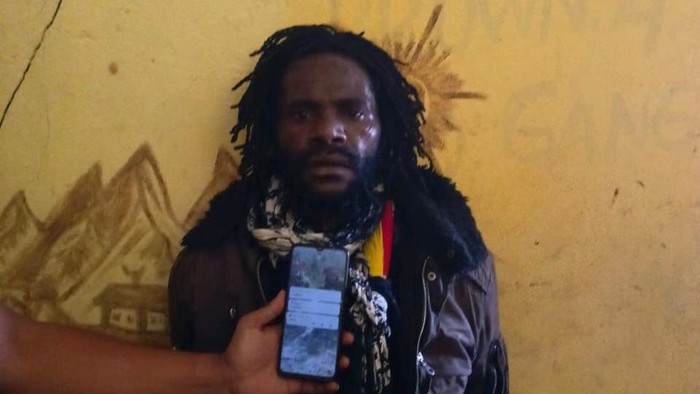
Yahukimo Regency suffered an urban terror wave orchestrated by the West Papua Separatist Regional Defense Command XVI under the command of Major Kopitua Heluka. Authorities trace this escalation back to Penihas (Kopitua Heluka) escaping from Wamena Prison on February 25, 2025. Following his escape, Kopitua Heluka successfully reconsolidated armed factions in Yahukimo and launched a series of systematic attacks that peaked in early 2026. His chief lieutenant, Meno Kogoya, led a high-profile sabotage operation on January 14, 2026, shooting a military Hercules transport plane at Nop Goliat Dekai Airport. This attack threatened the flight crew’s lives and delivered a strategic message: the separatists possess the capability to challenge Indonesian military air supremacy in the highlands.
Beyond aviation sabotage, separatist elements in Yahukimo waged a campaign destroying civilian infrastructure and educational facilities. On January 7, 2026, a group comprising Ferry Alimdam, Elix Malyo, and Olan Nalya burned down the Metanoya Junior High School in Dekai. They continued this destruction by burning Yakpesmi Junior High School on February 2 and Block B Shophouses on February 14, an attack involving Atius Sobolim and Elipianus Esema. The separatists designed this scorched-earth tactic to paralyze basic state functions and intimidate the civilian population living in the city center. These attacks also included shooting a civilian box truck at Kilometer 7 Logpon in late January, further disrupting the essential supply chain.
The cruelty of the separatists reached a climax mid-year when they released visual evidence showing the brutal execution of three Indigenous Papuan civilians on the Trans Papua Road in Seradala District. Security forces identified the victims as a married couple, Kumis Kogoya and Pam Wendakwe, along with a woman from the Unaukam Tribe. The West Papua Separatist spokesperson, Sebby Sambom, openly claimed responsibility for the execution, alleging the victims operated as Indonesian military intelligence agents. The Habema Indonesian National Armed Forces Operational Command categorically denied this accusation, asserting the victims were purely civilians with no military affiliation. The Indonesian Ministry of Human Rights strongly condemned the act, declaring that no humanitarian law justifies the extrajudicial killing of civilians.
Furthermore, the mining sector did not escape the armed aggression. On May 20, 2026, the separatist group launched a deadly attack on the Korowai gold mining area in Yahukimo Regency. This incident killed at least eight traditional miners on the spot. The attack triggered mass panic and caused the exodus of thousands of indigenous community members between May 22 and 23. Security forces eventually penetrated the area to evacuate the survivors. The continuous attacks in Yahukimo demonstrate that the separatists no longer differentiate between armed state combatants and unarmed civilians.
2. Central Papua Province: Militarization, Espionage Accusations, and Separatist Violence in West Papua
Central Papua Province recorded conflict dynamics that directly triggered a massive internal displacement crisis. The primary conflict zones centered in Puncak, Intan Jaya, Paniai, and Dogiyai Regencies. In this region, state military operations and separatist resistance collided violently amid densely populated civilian settlements.
In Intan Jaya Regency, the West Papua Separatist Regional Defense Command VIII, led by Lewis Kogoya, actively provoked and attacked security posts and government facilities in Sugapa District. The group frequently utilized hit-and-run tactics, forcing security forces to respond with heavy return fire. Because these shootouts often occurred in the middle of villages, tens of thousands of residents from districts like Agasiga, Hitadipa, and Sugapa fled into the forests or sought refuge in church complexes. By late June 2026, the refugee exodus continued unabated. Local Catholic leaders directly intervened to evacuate their congregations from crossfire zones. The separatists often exploit civilian settlement geography as human shields, a practice that drastically worsens civilian casualties when security forces conduct sweeping operations.
Puncak Regency witnessed the worst humanitarian tragedy during this semester. Armed conflict between the joint Indonesian National Armed Forces and Police apparatus and separatist forces erupted between April 13 and 15, 2026. The state initiated a large-scale military operation, claiming to pursue separatist combatants by sweeping the Pogoma and Kemburu Districts. The military penetrated these indigenous settlements using massive kinetic force, shooting and detonating projectiles or grenades that destroyed civilian housing structures. Investigative data compiled by a civil society coalition recorded that at least 19 civilians became direct casualties of this clash. The conflict tragically killed 10 civilians (including 5 women and 1 child) and two unborn babies. Meanwhile, the clash severely injured eight other civilians (including 3 women and 3 children).
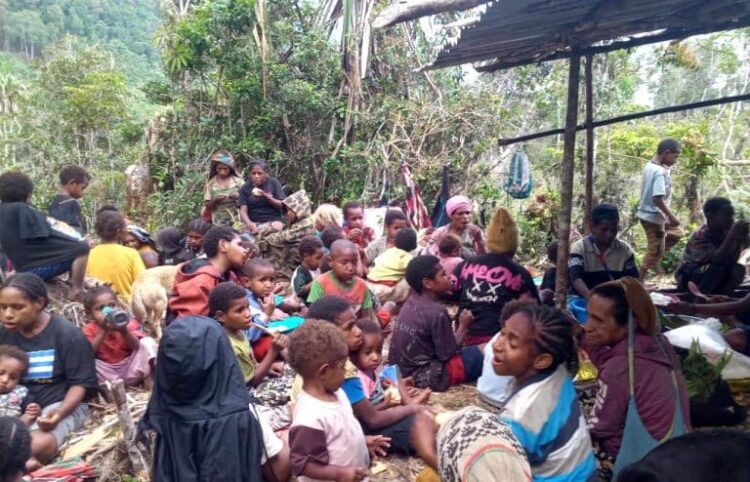
As a direct result of these operations, the military forcibly displaced over 6,305 residents from 11 villages—including Tenoti, Makuma, Kemburu, Nilme, Aguis, Belapaga, Molu, Gelegi, and Kimigomo. These residents had to flee to neighboring districts like Puncak Jaya. This wave of violence sparked massive protests. Thousands of civilians staged a peaceful rally in front of the Puncak Regional House of Representatives office in Ilaga in late April 2026, demanding the immediate cessation of all combat operations in their territory.
Alongside the impact of military operations, the separatists proactively executed lethal violence against local residents they deemed suspicious. Structural paranoia within the separatist group led them to issue extrajudicial death sentences against teachers, healthcare workers, drivers, and ordinary citizens who simply possessed certain haircuts or wore civil service attributes. The separatists used the accusation that these civilians collaborated with or spied for the security apparatus to justify their executions. This bitter reality highlights how Indigenous Papuans constantly find themselves trapped between two warring factions.
3. Southwest Papua Province: Frontal Warfare and Factional Dynamics
Shifting to the westernmost tip, Maybrat Regency in Southwest Papua Province stands out as a highly confrontational war zone. The West Papua Separatist Regional Defense Command IV Sorong Raya forces, orchestrated by militant figures such as Arnoldus Yancen Kocu, Brigadier General Denny Moos, and Manfred Fatem, showcased their presence through high-risk ambush operations against the Indonesian military posture.
The deadliest incident for the Indonesian military in this region occurred on March 22, 2026. The separatists launched a coordinated attack on a military post in Sori Village, South Aifat District. During this ambush, separatist forces killed two Indonesian Navy Marine soldiers, Private AS and Private ES, and critically injured another soldier, Corporal ES. Furthermore, the separatists did not merely claim success in killing military personnel; they also successfully seized two organic firearms and military logistical supplies from the post. Snatching these weapons provided a significant moral and material injection for the separatist group to continue their armed campaign.
Responding to the military casualties, the Indonesian National Armed Forces Task Force launched an aggressive pursuit in the South Aifat and Far East Aifat regions. The inevitable subsequent clashes killed a senior separatist field commander, First Lieutenant Alfons Sorri. This military operation directly created unsafe conditions for the local population. To prevent further civilian casualties, the military intervened to evacuate at least 21 displaced residents from Topo Hamlet, Ainesra Village, to safe shelters. Prior to the March battles, the Infantry Battalion Task Force 133/Yudha Sakti also reportedly seized Manfred Fatem’s separatist headquarters in Sagu Hamlet in January. This indicates that intense military conflict has raged in Maybrat since the beginning of the year.
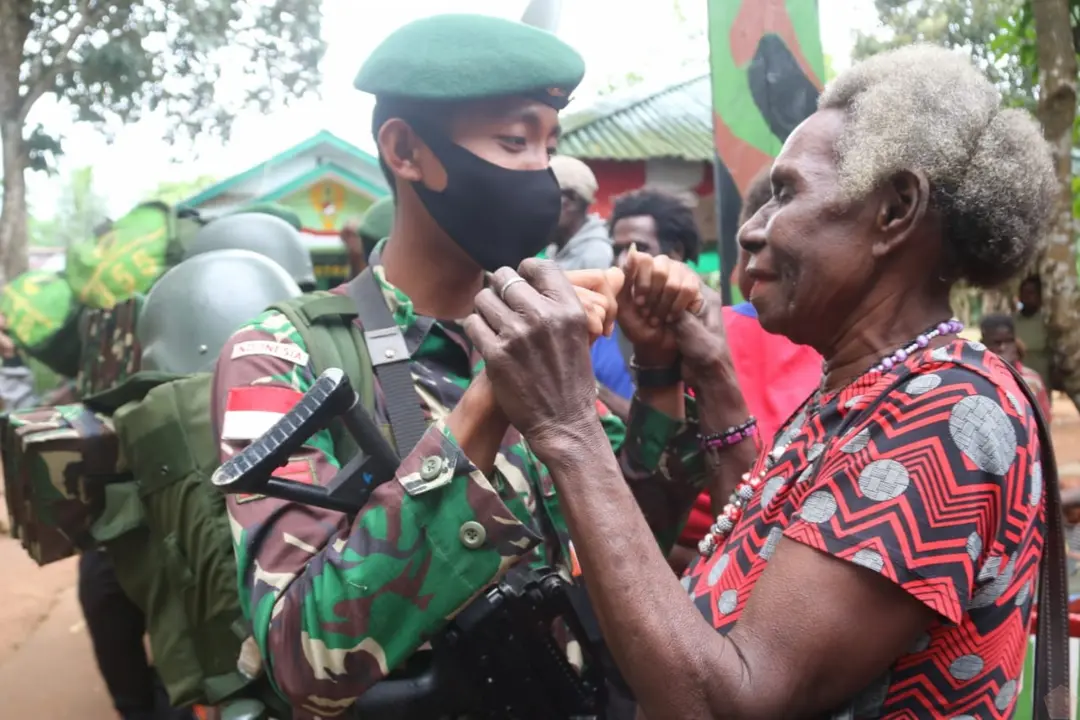
However, toward the end of the first half of 2026, a contrasting dynamic emerged. It revealed factionalism and fatigue within the Sorong Raya separatist forces. Through persuasive and intelligence approaches conducted by the XVIII/Kasuari Military Command and Joint Regional Defense Command III, a separatist leader in region IV Sorong Raya, Yeremias Foumair, decided to lay down his arms. Between mid-May and late June 2026, Yeremias and 10 other active former separatist members formally descended from the mountains and pledged their allegiance to return to the Unitary State of the Republic of Indonesia. This phenomenon indicates that while some separatist factions obstinately pursue military resistance, internal elements have begun seeking a way out of the endless cycle of violence.
4. South Papua and Papua Provinces: Strategic National Projects and Escalating Territorial Conflict
Although the intensity of firefights did not reach the levels seen in the mountainous regions, South Papua and Papua Provinces represent areas where structural tension gathers destructive momentum. Here, the conflict involves communities, state development projects, and separatist groups. In this region, the narrative of violence mostly revolves around rejecting the expansion of National Strategic Projects and the formation of a new security instrument: the Territorial Development Battalion.
The central government instructed the acceleration of massive food estate megaprojects based on sugarcane and rice, covering over 2 million hectares of land in Merauke Regency, South Papua Province. To secure the projects managed by corporations like PT. Murni Nusantara Mandiri, the Indonesian Army deployed Territorial Development Battalion units and the ADRI XLIX logistics ship to build supporting infrastructure. This military expansion into the economic and civilian domain marginalized local indigenous legal authority and triggered indigenous community resistance, as experienced by the Kwipalo Clan in January 2026. In Biak Numfor, Papua Province, land disputes between the Rumawak Clan and military institutions attempting to build a new base also culminated in intimidation and physical violence.
The West Papua Separatists quickly capitalized on this state-legitimized land grabbing situation to expand their threat reach. In the first half of 2026, the Operations Commander of the West Papua Separatist Regional Defense Command XVI Yahukimo, Major Kopitua Heluka, issued an official press release. He accused the Indonesian government of using foreign mercenaries in Boven Digoel and Merauke Regencies, South Papua. Building on this premise, the separatists declared an open threat. They vowed to target and execute any foreign investors, mercenaries, or migrants operating and destroying the environment in their South Papua operational area. This statement confirms that the separatists are actively attempting to expand their operational theater into the resource-rich southern region. They use the issue of land dispossession as a catalyst to garner public support. Ultimately, the presence of armed personnel protecting strategic industrial assets vulnerable to sabotage became the primary justification for establishing hundreds of Territorial Development Battalion units across the region.
Comprehensive Quantification: Statistical and Casualty Analysis of the Violence in West Papua
To comprehend the destructive scale of this conflict, analysts must quantify the data based on independent investigative reports from civil society coalitions, Human Rights Monitor, Amnesty International, and confirmed police and military operational releases. The statistical data below represents highly verified incident tabulations. However, given the fog of war context, observers firmly believe the actual figures on the ground far exceed these records.
Table 1: Tabulation of Estimated Casualties and Incidents of Violence (January – June 2026)
| Impact / Casualty Classification | Primary Incident Concentration Areas | Estimated Verified Figures | Analysis of Involvement and Primary Causes |
| Indigenous Papuan and Migrant Civilian Fatalities | Puncak, Yahukimo, Dogiyai, Intan Jaya | > 30 Individuals | Killed by direct West Papua Separatist executions (intelligence accusations), massacres of mine workers, and stray bullets/projectiles during state military sweeping operations. This includes 10 individuals in Puncak, 8 miners in Korowai, 5 in Dogiyai, and 3 executed in Seradala. |
| Civilians Suffering Severe Injuries | Puncak, Dogiyai, Biak Numfor | Dozens of Individuals | Sustained gunshot wounds, trauma from grenade explosions (such as the Puncak incident injuring 8 people), and victims of arbitrary torture (such as the Yahukimo incident involving security forces in February). |
| State Security Apparatus (Indonesian National Armed Forces/Police) Fatalities | Maybrat (South Aifat), Dogiyai, Puncak | Fluctuating (Restricted Status) | Killed due to systematic ambush operations by West Papua Separatists. Records show 2 Marine soldiers (Private AS and ES) killed in Maybrat and 1 police officer found dead in Dogiyai. |
| West Papua Separatist Combatants Neutralized/Arrested | Yahukimo, Maybrat, Paniai, Puncak | > 12 Killed, Dozens Arrested | Resulted from precision operations by the Cartenz Peace Task Force. In Yahukimo, authorities arrested 28 suspects (9 active separatists). Killed combatants include First Lieutenant Alfons Sorri (Maybrat), Afrika Heluka, and Toni Giban (Yahukimo). |
| Defections / Surrendering to the Republic of Indonesia | Sorong Raya (Maybrat) | 11 Combatants | West Papua Separatist leader Yeremias Foumair and 10 followers surrendered their weapons following soft approaches by Joint Regional Defense Command III and the Kasuari Military Command. |
| Internally Displaced Persons | Puncak, Intan Jaya, Nduga, Yahukimo | > 107,039 Individuals | Cumulative data from Human Rights Monitor Q1 2026. This figure includes chronic remaining refugees and acute exodus additions from 11 villages in Puncak Regency (6,305 individuals) due to combat operations. |
Based on the table above, the civilian fatality ratio marks a highly concerning record. The community exists in a state of layered vulnerability. They become execution targets for the separatists if they refuse to support the separatist movement. Simultaneously, they suffer as collateral damage from state security operations that heavily prioritize militaristic approaches. The internal displacement wave surpassing 100,000 individuals indicates mass depopulation in the indigenous mountainous regions. Ultimately, this displacement will destroy the social fabric, subsistence farming sustainability, and the younger generation’s access to basic education.
Beyond the loss of life, the economic losses stemming from separatist pioneer aircraft sabotage carry destructive macroeconomic implications for Central and Mountainous Papua. Aviation serves as the only commercial logistical supply method. When airlines suspend flights due to surface-to-air gunfire security risks, the supply chain breaks completely. This severance triggers hyperinflation for basic commodities, such as rice and fuel. The separatists artificially created this crisis to weaken state resilience, but in reality, their actions strangle the purchasing power of the Papuan people themselves.
Structural and Tactical Anatomy Driving the Armed Conflict
Synthesizing all operational data, attack patterns, and propaganda rhetoric produced by the separatists during the first half of 2026 reveals a stark truth. This conflict does not consist of random incidents. The aggression manifests a multi-layered strategy driven by short-term tactical motives, medium-term operational strategies, and long-term structural resistance roots. This report categorizes the violence into three analytical pillars:
1. First-Order Motives: Espionage Paranoia and Combat Logistics Acquisition
At the daily operational level, practical military needs and internal psychological pressure drive the violence the separatists commit. First, the group launches deadly attacks on military posts, such as those executed by Regional Defense Command IV Sorong Raya in Maybrat, purely to seize organic firearms and ammunition. Severe weapon supply limitations force the separatists to rely heavily on acquiring state military assets through bloody ambush tactics.
Second, an acute espionage paranoia syndrome motivates the high execution rate of Indigenous Papuan and migrant civilians. The separatists utilize “intelligence agent” or “Indonesian National Armed Forces and Police collaborator” accusations to justify extrajudicial killings. They recorded and publicized the brutal Seradala execution to apply psychological warfare. Their motive is to discipline the local population, spread terror so that the community does not dare provide any information to the Cartenz Peace Task Force, and force citizens to submit to separatist authority under the shadow of gun barrels.
2. Second-Order Motives: Economic Denial Strategy and Territorial Sabotage
Moving to the strategic level, the separatist violence campaign in 2026 demonstrates a precisely calculated economic denial motive. By consistently attacking and burning logistical transport planes, and destroying public facilities like Block B Shophouses and schools in Yahukimo, the separatists intend to create ungovernable spaces.
The primary motive aims to make the cost of territorial control astronomically expensive and highly risky for the Indonesian government. By paralyzing commercial economic activities and sabotaging the operations of multinational companies and National Strategic Projects, the separatists attempt to prove to the international community that Jakarta has failed to provide security and no longer holds absolute sovereignty in the Papuan region. The direct threats against foreign investors and migrant workers in Merauke and Boven Digoel by Regional Defense Command XVI Yahukimo represent a direct escalation of this territorial sabotage strategy. They designed this approach to prevent capital exploitation in territories they claim as colonized lands.
3. Third-Order Motives: Resistance against Autocratic Legalism and “Sacrifice Zones”
At its structural root, Jakarta’s policies, which many perceive as institutionalizing economic injustice and social marginalization, continuously fuel the separatist armed resistance motives. Civil society coalitions define the Papuan region as a “sacrifice zone.” In this framework, the state sacrifices the living space rights of indigenous communities to accumulate economic capital based on natural resource extraction and giant food security projects.