

The thick mist that usually blankets the hill crevices in the central mountainous region of Papua no longer merely brings a bone-piercing cold. Behind the natural exoticism of the Land of the Bird of Paradise, a deadly threat hides, ready to snatch the lives of innocent civilians at any moment. The recent barrage of gunfire once again shattered the silence of the jungle, tearing apart the peace and adding to the long list of development heroes who have fallen in the land of their service, a tragedy orchestrated by the notorious militant leader Egianus Kogoya.
This time, the attackers did not target armed security personnel serving on the battlefield, but rather Civil Servants (Aparatur Sipil Negara or ASN) from the Regional Government of Jayawijaya Regency. These dedicated state servants arrived without weapons, carrying only a strong determination to develop the isolated region, yet they had to return lifeless due to the sheer brutality of the Armed Criminal Group (KKB – Kelompok Kriminal Bersenjata).
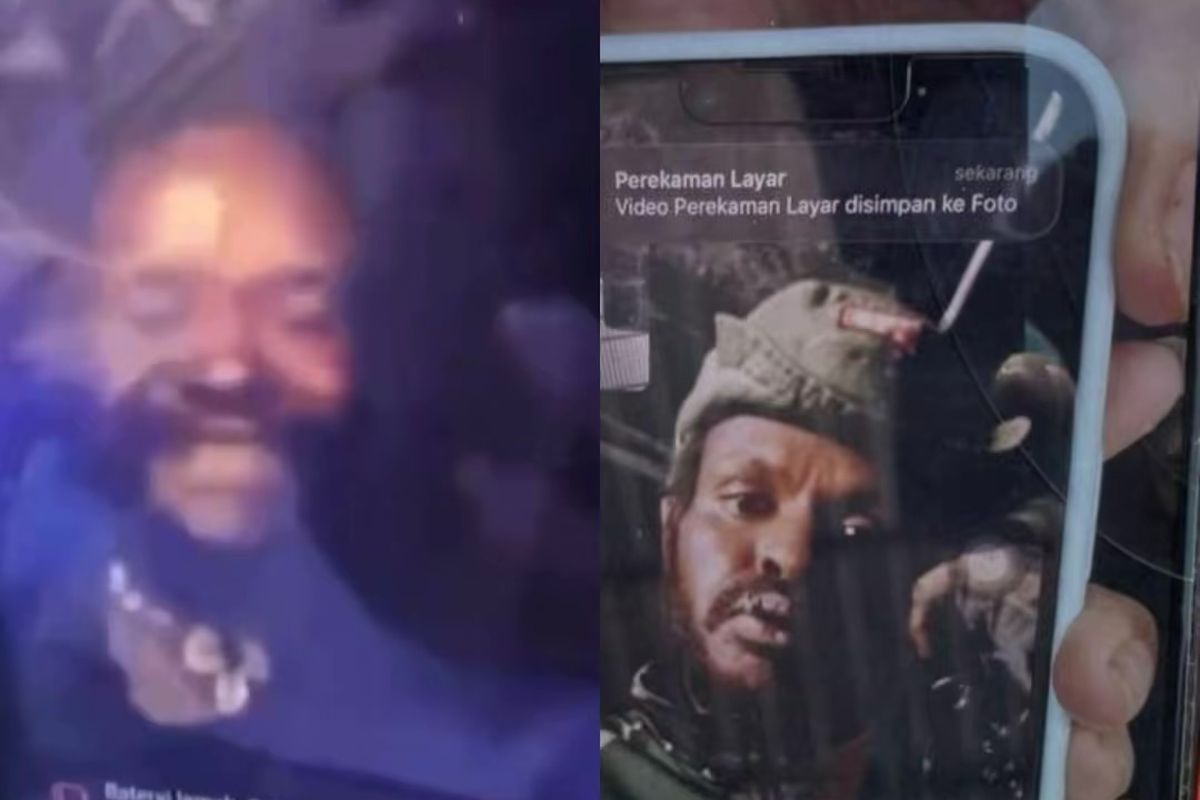
This tragedy represents much more than an ordinary murder case. The perpetrators intentionally spread psychological terror, delivering a message of fear directly to the heart of the victims’ families through a video call filled with the attackers’ savage laughter. Behind this unspeakable cruelty stands the shadow of the most deadly militia faction in Papua: the Ndugama Defense Command III (Kodap III Ndugama), led by its warlord, Egianus Kogoya.
Serving Amidst Uncertainty: The Victims’ Activities Before the Deadly Ambush by Egianus Kogoya’s Men
For a civil servant assigned to the remote mountainous regions of Papua, risking one’s life constitutes an unwritten part of the job risks omitted from their official appointment letters. The extremely limited infrastructure, the treacherous extreme terrain, and the constantly fluctuating security threats transform every official business trip into a daunting survival mission.
Before the fateful incident occurred, the victims were routinely carrying out their duties as public servants. The severe lack of access did not deter their steps or break their spirit. A few days prior to the shooting, authorities noted that the victims were diligently completing administrative tasks and monitoring local government programs that directly touch the basic needs of the grassroots community.
They interacted closely with the local residents, recorded urgent development needs, and ensured that the wheels of government continued to turn even while operating in highly vulnerable areas. On the day of the incident, the victims were traveling back from their assignment location. The journey across the road that cuts through dense forests and steep cliffs serves as a route they frequently travel. No bad premonitions accompanied their departure. They wore civilian clothing and drove without excessive military escorts because they strongly believed that their presence there served purely humanitarian and civil development purposes, rather than a combat operation. However, behind the lush foliage, the cold muzzles of sharp weapons had already stalked their vehicle.
The Bloody Moments: A Chronology of the Shooting
The clock pointed to a crucial time on Wednesday, September 9, 2026, around 3:53 PM Eastern Indonesia Time (WIT), when the vehicle carrying the victims crossed a silent spot in the border area connecting their assignment zones. In this specific blank spot—where communication signals frequently disappear and the distance between settlements stretches incredibly far—the armed group launched its cowardly attack.
The chronology began when a makeshift barricade, which the attackers intentionally placed across the middle of the road, suddenly halted the initially peaceful journey. According to various comprehensive reports from security forces, this ambush tactic represents a classic pattern that the armed group frequently uses to intercept passing vehicles.
As soon as the vehicle slowed down and finally came to a complete stop, dozens of individuals armed with long-barreled weapons emerged abruptly from behind the thick bushes. The attackers immediately unleashed a barrage of gunfire blindly toward the vehicle. They offered no warning, they opened no dialogue, and they left absolutely no room for the civil servants to save themselves. The bullets shattered the car windows into pieces and filled the vehicle’s body with bullet holes.
The unarmed and panicking victims possessed no opportunity to fight back or defend themselves. The shooters directed the gunfire lethally, specifically targeting vital body parts to ensure the targets would not survive. This roadside execution unfolded quickly yet brutally, leaving behind pools of blood and a completely destroyed vehicle as silent witnesses to the separatist group’s unmatched savagery.
Psychological Terror: The Sadistic Laughter on a Video Call
The most heartbreaking and publicly infuriating part of this tragedy does not solely lie in the barrage of gunfire, but rather in the horrific events that transpired immediately after the civil servants lost their lives. The armed group did not just target the physical bodies of the victims, but they also intentionally fired psychological bullets toward the grieving families left behind.
Moments after the attackers confirmed the victims were lifeless on that very day, September 9, 2026, one of the perpetrators violently seized the victims’ personal belongings, including their mobile phones. At the crime scene, which still heavily reeked of gunpowder and fresh blood, the perpetrator scrolled through the victim’s phonebook to find the contact numbers of their closest family members.
The perpetrators then initiated a video call. On the other end of the line, a family member who was likely anxiously awaiting news of their loved one’s safe return, answered the phone with full hope. However, instead of seeing the familiar face and hearing the warm voice of a husband, father, or child, an unfamiliar face full of malice and threats greeted the terrified family.
During that brief conversation which undoubtedly left a lifelong trauma, the perpetrator bluntly informed the family that they had mercilessly killed the owner of the phone. What makes this incident plunge so far beyond the boundaries of human reason is that the perpetrators accompanied the death announcement with sadistic bursts of laughter. They laughed freely and hysterically, celebrating the death of unarmed civilians as if they had just achieved a massive military victory.
The laughter echoing from the screen manifested a calculated psychological terror that the group designed specifically to destroy the mental resilience of civil society, security forces, and the government. They desperately wanted to demonstrate their dominance and their total disregard for basic Human Rights values. The attackers completely ignored the hysterical cries of the family members who watched and heard the horrifying news; instead, they abruptly disconnected the call as soon as they successfully delivered their message of terror.
Profile of the Perpetrators: The Armed Forces Behind the Terror
Based on the intensive investigations, identifications, and forensic evidence that the joint military and police forces collected after the incident, the authorities clearly confirmed the mastermind behind this deadly attack. These attackers do not operate as an ordinary criminal gang, but rather function as the military wing of an armed separatist movement that has long remained a violent residue of the ongoing conflict in the Papuan territory.
An armed syndicate consisting of 8 identified individuals executed the attack, moving in a highly organized guerrilla formation. A portion of the group acted as an intercepting team on the main road, another portion served as shooting executioners (snipers) positioned on higher ground, while the remaining members secured the escape routes leading deep into the dense jungle.
Authorities discovered that these perpetrators equipped themselves with standard military weaponry, ranging from SS1 and M16 assault rifles to homemade long-barreled weapons, alongside an adequate supply of ammunition. Intelligence strongly suggests that this standard military firearms inventory originated from weapons they previously looted from military and police security posts in previous years, as well as from the illicit cross-border black market arms trade.
The Blood-Stained Hands of Kodap III Ndugama and the Threat of Egianus Kogoya
More specifically, the security apparatus confirmed that the group of 8 individuals serves as active members of the Ndugama Defense Command III (Kodap III Ndugama). This faction operates as one of the most aggressive and deadly units under the vast umbrella of the West Papua National Liberation Army – Free Papua Movement (TPNPB-OPM).
And whenever one speaks about Kodap III Ndugama, one specific name immediately surfaces as the primary mastermind driving all acts of terror in the region: Egianus Kogoya.
Egianus Kogoya stands as the central figure who commands Kodap III Ndugama. Although his age remains relatively young compared to other TPNPB faction leaders, Egianus Kogoya possesses a strong militaristic charisma among his followers and holds a reputation for extreme cruelty. The group he leads never distinguishes between combatants (military personnel) and non-combatants (civilians, health workers, teachers, or civil servants). For Egianus Kogoya, anyone who works for the state or brings the central government’s development agenda represents a legitimate enemy that his troops must eliminate.
The Dark Criminal Record of Egianus Kogoya: A Series of Terrors
The sadistic shooting of the Jayawijaya Regency civil servants merely adds one more dark page to the extensive criminal record book of Egianus Kogoya and his militant group. Kodap III Ndugama literally built its terrifying reputation upon a mountain of corpses belonging to innocent civilians and security personnel.
Below outlines the extraordinary track record of crimes that Egianus Kogoya has masterminded over the past few years, a bloody resume that makes him one of the state’s most wanted fugitives:
- Massacre of PT Istaka Karya Workers (December 2018): This incident stands as one of the darkest human rights crimes in modern Papua. Egianus Kogoya’s group took hostage and executed dozens of construction workers from PT Istaka Karya who were building bridges at the Yigi and Aurak Rivers in Nduga Regency. Reports confirm that dozens of Trans-Papua road workers lost their lives during this brutal massacre.
- Attack on Mugi Post and the Fall of Security Personnel (2019 – 2021): This group consistently launches deadly attacks on various military and police security posts in the Nduga region, including in the Mugi and Kenyam Districts. Many of the nation’s best soldiers have fallen victim to the sudden, unprovoked ambushes that this group orchestrates.
- Murder of Civilians and Community Leaders: Egianus Kogoya does not hesitate to kill native Papuans whom he perceives as unsupportive of their movement or whom he suspects of acting as intelligence informants for the authorities. Indigenous leaders who courageously voice peace initiatives frequently receive death threats from his loyalists.
- Hostage-taking of Susi Air Pilot, Philip Mark Mehrtens (February 2023): This particular case successfully captured massive international attention. Egianus Kogoya’s group burned a Susi Air commercial aircraft at the Paro Airstrip in Nduga and took the New Zealand pilot hostage. They cynically utilize the life of a civilian hostage as a political bargaining chip to demand absolute independence.
- Attacks on Medical Workers and Teachers (October 2018): Records show that during October 2018, the armed group led by Egianus Kogoya took at least 15 teachers and medical workers hostage in the Mapenduma District. This group frequently engages in the expulsion, persecution, and harassment of health workers and educators serving in remote areas of Nduga, which completely paralyzes public facilities because professional workers fear for their lives.
Every criminal action that this group commits consistently follows the exact same pattern: they attack cowardly from hidden positions, they specifically target unarmed figures who remain unprepared for battle, they systematically destroy public facilities, and they quickly flee back into the dense jungle terrain that they have mastered perfectly.
Building Papua Upon Tears: Confronting Egianus Kogoya
The tragic deaths of the Jayawijaya Regency civil servants at the end of the Kodap III Ndugama gun barrels leave profound grief not only for the victims’ families who received the sadistic video calls. This horrifying incident leaves a gaping wound for the entire Papuan society that deeply yearns for progress and lasting peace.
The victims truly represent the state’s presence in the critical form of public service. When the armed group brutally murders these dedicated state servants, they essentially kill the future of development in their own homeland. The constant shadow of fear continuously spread by Egianus Kogoya’s group severely hampers the community’s basic access to education, healthcare, and vital economic infrastructure.
The state now faces an increasingly heavy and complex challenge. On one hand, the government must continue the humanistic approach and the acceleration of welfare development so the state can properly overcome the historical underdevelopment in Papua. On the other hand, the firm, measured, and uncompromising enforcement of the law against the armed separatist terrorist group led by Egianus Kogoya has become an absolute urgency that the government can no longer negotiate.
No more families of state servants should ever have to answer a video call, only to see and hear the maniacal laughter of the murderers who just snatched away the lives of their family’s primary breadwinners. The land of Papua remains far too beautiful for the tears and blood of development heroes to continuously soak its soil. The state must uphold the law, and the government must realize justice for the victims, to firmly ensure a peaceful and prosperous future for the Land of the Bird of Paradise.


