
Indonesia encompasses numerous diverse regions across its vast archipelago, each holding unique geographical and cultural significance. As a historically vital and easternmost territory, Papua Province offers a fascinating blend of pristine nature and rich cultural heritage. The region formerly carried the names West Irian from 1956 to 1973 and Irian Jaya from 1973 to 2000. Today, the provincial capital Jayapura serves as the primary administrative and economic hub, sharing a direct international border with Papua New Guinea. Following a major administrative division on June 30, 2022, which created Central, Highland, and South Papua, the newly defined territory focuses primarily on the northern coastal areas. By the end of 2025, local authorities recorded a total population of 1,122,097 residents living within this updated boundary.
Geography and Topography
The region features a dramatic landscape that stretches from expansive coastal plains to towering, densely forested mountain ranges. Following the 2022 regional split, Papua Province now spans an area of 82,681 square kilometers, making it significantly more compact than its original 312,224.37 square kilometers. The territory borders the Pacific Ocean to the north and shares an eastern land boundary with Sandaun Province in Papua New Guinea. To the south, the region meets Highland Papua and Central Papua, while Central Papua also borders its western edge. Mighty rivers and lush rainforests cover most of the landmass, housing immense biodiversity and protecting rare endemic flora and fauna.
Administrative Divisions
To effectively manage its vast territory and diverse population, Papua Province organizes its administrative structure into eight regencies (kabupaten) and one independent city (kota). Local governments divide these regions further into numerous districts and villages to ensure efficient public service delivery.
| No. | Regency/City | Capital | Area (km²) | Population (2025) | Districts | Villages |
| 1 | Biak Numfor Regency | Biak | 2,258.863 | 150,318 | 19 | 14/254 |
| 2 | Jayapura Regency | Sentani | 14,081.935 | 203,772 | 19 | 5/139 |
| 3 | Keerom Regency | Waris (de jure) / Arso (de facto) | 9,526.315 | 74,332 | 11 | -/91 |
| 4 | Kepulauan Yapen Regency | Serui Kota | 2,425.374 | 115,648 | 16 | 5/160 |
| 5 | Mamberamo Raya Regency | Burmeso | 26,745.359 | 41,036 | 8 | -/60 |
| 6 | Sarmi Regency | Sarmi | 14,068.312 | 45,084 | 10 | 2/92 |
| 7 | Supiori Regency | Sorendiweri | 660.681 | 27,965 | 5 | -/38 |
| 8 | Waropen Regency | Waropen Bawah | 10,781.037 | 38,840 | 11 | -/100 |
| 9 | Jayapura City | – | 835.439 | 404,799 | 5 | 25/14 |
Demographics and Religion
The population consists of a dynamic mix of indigenous Papuan tribes and migrants who relocate from other Indonesian islands. As a cultural melting pot, Papua Province hosts hundreds of unique indigenous ethnic groups, including the Biak, Yapen, Enggros, Nafri, Sentani, Tobati, and Waropen tribes. Historical census data from 2010 indicates that native Papuans make up approximately 76.32% of the population. Meanwhile, migrants primarily include Javanese, Bugis, and Maluku communities who actively contribute to the local economy. Residents predominantly practice Christianity, though a significant Muslim minority also thrives in urban centers like Jayapura and surrounding coastal towns.
See also: Profile of Central Papua Province
Culture and Society
Indigenous communities in Papua Province maintain strong ties to their ancestral traditions and fiercely protect their cultural identities. Various tribes celebrate their vibrant heritage through elaborate traditional dances, intricate woodcarvings, and communal festivals. The community structure heavily relies on customary laws, which govern land ownership, resource distribution, and overall social harmony. Tribal elders play a crucial role in society, as they resolve local disputes, guide community decisions, and preserve the rich oral histories of their respective clans.
Economy and Infrastructure
The regional economy depends heavily on agriculture, fisheries, and natural resource extraction, which drive local financial growth. Government initiatives currently focus on improving local infrastructure by constructing road networks and expanding regional airports. These strategic developments aim to connect isolated interior districts with the rapidly growing coastal cities, thereby reducing logistical costs. Furthermore, Papua Province exports significant quantities of marine products, agricultural commodities, and timber to broader domestic and international markets.
Tourism
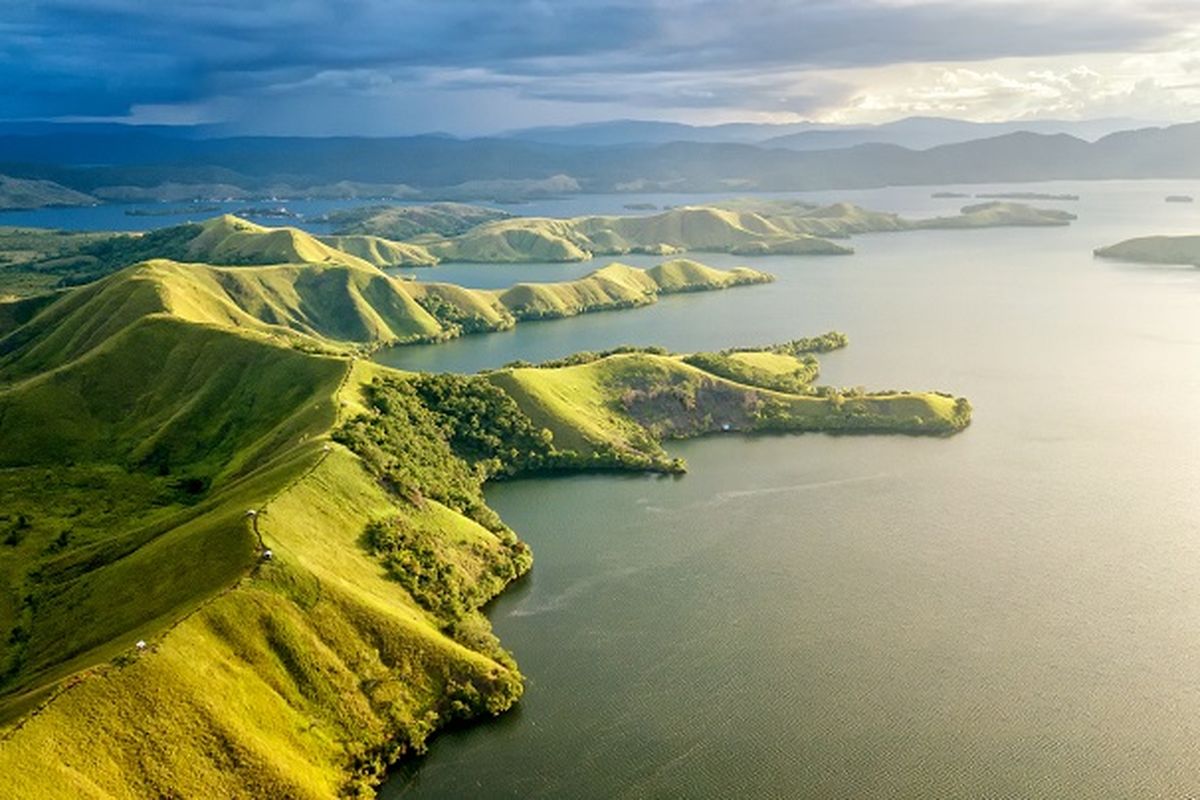
Adventurers and nature enthusiasts consider Papua Province a premier destination for off-the-beaten-path exploration and authentic cultural experiences. Lake Sentani offers breathtaking panoramic views and hosts the annual Lake Sentani Festival, which draws visitors globally to witness traditional boat races and local artistry. Stunning coastal spots like Base-G Beach and Harlem Beach attract tourists with their crystal-clear waters and pristine white sands. Meanwhile, strict nature reserves protect rare endemic species, allowing dedicated eco-tourists to observe magnificent birds of paradise thriving in their natural habitats.