Six Governors across the Land of Papua met in Manokwari, West Papua Province, to sign a Joint Agreement on the Acceleration of Sustainable Development in West Papua (02/13/2026). This collaboration continues the synergy and coordination following the expansion of Papua into six distinct provinces.
This momentum emerged from the Flora Malesiana Symposium XII and the Nature-Based Solutions Conference (February 9-12, 2026). These events brought together scientists, government representatives, BRIN, BRIDA, the private sector, and local communities.
Prioritizing Indigenous Rights in Development
The Governor of West Papua, Dominggus Mandacan, emphasizes that regional growth must not marginalize customary land rights holders. He states that the authorities will only achieve the target of maintaining 70% forest cover and 50% marine areas if they fully involve indigenous peoples in planning and management.
“We in West Papua share a collective commitment to guarantee the protection of our forests,” says the 2019 Global Conservation Hero award winner. He explains that preserving 70% of forest cover and 50% of the sea provides climate benefits for both the world and the local people. He likens the Land of Papua to a small paradise fallen to earth, possessing abundant natural resources.
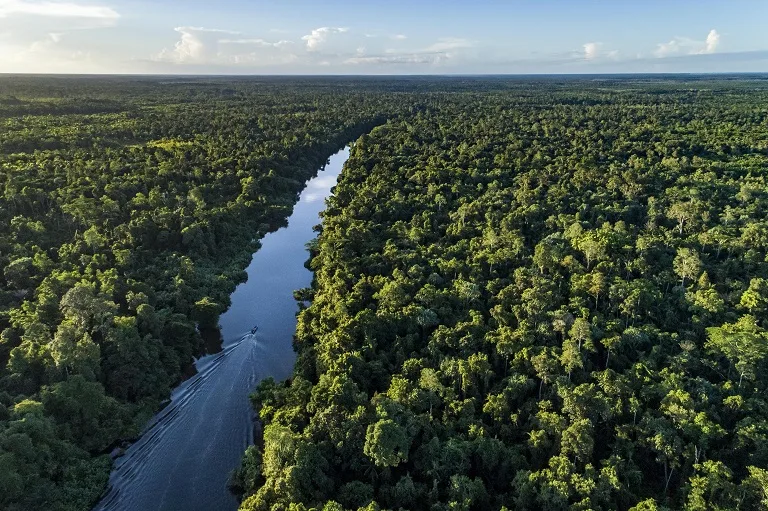
He believes the government can empower indigenous communities through these resources. These tribes own the forests and rely on them for food and water. Officials must involve them so they can stand at the forefront of conservation. In Papua, more than 250 ethnic groups live alongside tropical rainforests and rivers that provide food, medicine, and cultural identity.
This strategic move aligns with the framework for Sustainable Development in West Papua announced in the Manokwari Declaration. This declaration successfully bridges the gap between scientific research and regional policy.
Scientific Foundations for a Green Economy
Research presented at the Flora Malesiana Symposium XII shows that Papua houses over 13,000 species of vascular plants. This data confirms Papua as the world’s richest island for plant diversity, boasting a 60% endemism rate. Scientists believe this number remains incomplete because many areas lack systematic surveys.
Ethnobotanical studies record hundreds of species that indigenous people use directly. For example, sago serves as a staple food, while pandanus provides materials for weaving and housing. With proper research support and market access, these local flora can drive a green economy and create jobs in villages. Such initiatives strengthen the incentives for communities to protect the natural landscapes that sustain them.
The Cooperation Charter for Sustainable Development in West Papua
The cooperation document contains nine key points. These include maintaining a minimum of 70% forest cover as the foundation for Sustainable Development in West Papua. It also strengthens cross-provincial collaboration through joint forums and technical teams.
Furthermore, the agreement pushes for the effective implementation of Special Autonomy. It positions Indigenous Law Communities and Indigenous Papuans as the primary subjects of development. The governors also aim to form the “One Papua Planning Forum” to synchronize development across all six provinces.
Dominggus describes this agreement as carrying the spirit of “One for Six, Six for One.” This charter serves as a strategic step toward the Papua Golden Vision 2041 and Papua 2100. It seeks to ensure fair and inclusive growth while protecting the living space of indigenous peoples.
“This collaborative initiative builds on the 9 Messages of the Baliem Valley (April 2024),” Dominggus stated in a press release. He believes this agreement will bridge development gaps through the joint responsibility of local and central governments, development partners, and the public.
Integrating Science and Local Wisdom for the Future
The scientific gathering also marked the official launch of the book Palms of New Guinea by Prof. Charlie Heatubun and fellow researchers. This 726-page book records the long relationship between Papuans and their environment. It documents how people use various palm species for food, building materials, and rituals.
“Palms are everywhere—people in Papua use them for everything from food to traditional needs,” says Charlie. He views the study of palms as a practical entry point for discussing conservation. This data supports the push for Sustainable Development in West Papua by providing a baseline for inclusive policies.
Researchers also highlighted the cultural-anthropological side of flora. For instance, the Moi people in Southwest Papua utilize hundreds of plant species for traditional medicine. In coastal areas, residents process pandanus into value-added products like syrup and jam. However, climate change and land conversion still threaten these habitats.
In Raja Ampat, the Ma’ya community uses ecological knowledge to manage marine conservation areas. This nature-based solution protects coastal forests while opening eco-tourism opportunities. Additionally, recent surveys in the Vogelkop Peninsula documented 60 palm species in just seven locations. This high local diversity proves that the forest ecosystems remain vital yet vulnerable to habitat fragmentation. Protecting these areas is essential for the long-term success of Sustainable Development in West Papua.