West Papua experienced a monumental administrative transformation in 2022 when Indonesia’s government created four new provinces from the original Papua and West Papua provinces. This geopolitical event, known as “pemekaran” or regional division, provides the essential context for understanding the contemporary role of the cities designated as new government centers.
This policy had a strategic aim: to accelerate development, improve public service effectiveness, and address long-standing local aspirations. As a consequence, four cities—Merauke, Nabire, Wamena, and Sorong—elevated their status from regency capitals to provincial capitals, placing them on a new and challenging development trajectory.
The six cities can be categorized into two groups: historical and new capitals. Manokwari (West Papua Province) and Jayapura (Papua Province) are well-established administrative hubs with long histories as government centers. In contrast, Merauke (South Papua Province), Nabire (Central Papua Province), Wamena (Highland Papua Province), and Sorong City (Southwest Papua Province) are newly designated capitals, each with a unique starting point, geographical characteristics, and development challenges.
In-Depth Profiles of West Papua Provincial Capitals
1. Manokwari: The “City of the Gospel” and West Papua’s Administrative Hub
Administrative and Geographical Context
Manokwari plays a crucial role as the capital city of West Papua Province, a status it has held since the province’s official establishment. Geographically, the city holds a strategic position on the northern coast of the Bird’s Head Peninsula (Vogelkop), specifically in Doreri Bay. Manokwari’s astronomical coordinates place it between 0∘15’ – 30∘25′ South Latitude and 132∘35′ – 134∘45′ East Longitude. Its boundaries include the Pacific Ocean to the north, Bintuni Bay to the south, Sorong and South Sorong Regencies to the west, and Wondama Bay to the east.
Demographics and Area
According to data from the Central Bureau of Statistics of Indonesia, Manokwari City’s area spans 3,168.28 km². The Indonesian Ministry of Home Affairs recorded a population of 203,191 people in Manokwari Regency at the end of 2023. This number shows stable growth compared to the 2015 data, which recorded around 201,218 people.
Historical Designation and Key Infrastructure
Manokwari holds a reputation as the oldest government city in West Papua. Its administrative history began in the Dutch colonial era on November 8, 1898. The establishment of West Irian Jaya Province (now West Papua) was based on Indonesian Law No. 45 of 1999. Then, Indonesian Government Regulation No. 24 of 2007 reinforced Manokwari’s status as the provincial capital, officially renaming the province West Papua.
Vital infrastructure supporting the city’s connectivity is Rendani Airport (MWK). In recent years, the airport has undergone significant improvements, including extending its runway to 2,300 meters. This strategic project aims to attract more airlines, increase flight frequency, and ultimately stimulate economic growth and tourism in the region.
Security and Regional Stability
Official reports from the West Papua Regional Police (Polda) and news sources consistently describe the security situation in Manokwari as “safe and conducive.” The security narrative in the city emphasizes proactive and preventive measures. Operations such as “Operasi Patuh Mansinam” and enhanced routine patrols, especially after certain incidents, demonstrate a security model based on visible law enforcement presence and early prevention.
Unique Characteristics and Development Potential
Manokwari’s primary identity is the “City of the Gospel.” This nickname has deep historical roots, commemorating the arrival of two German missionaries, Carl Wilhelm Ottow and Johann Gottlob Geissler, on Mansinam Island on February 5, 1855, which marked the beginning of the spread of Christianity in West Papua. This historical-religious identity is a source of strong local pride and has profound cultural significance.
From a tourism perspective, Manokwari is blessed with exceptional natural assets. Its main destinations include the Wondiwoy Mountains Nature Reserve, Gunung Meja Nature Park, and the underwater beauty of Doreri Bay, adorned with WWII shipwreck remnants that now house coral reefs. Pasir Putih Beach also serves as a popular tourist destination for locals and visitors alike.
Manokwari also acts as a gateway to the culture of the Arfak tribe, known for its unique traditions and architecture. One of the most iconic is the Thousand-Legged House (known as Mod Aki Aksa or Igkojei). This vernacular architecture directly responds to environmental conditions and historical context. Its design—a stilt house with many dense supporting poles, windowless walls, and only two doors—was built to provide protection from wild animals, cold mountain air, and past inter-tribal conflicts. This architectural form is a physical manifestation of the Arfak people’s philosophy of security, communality, and harmony with nature.
Manokwari’s economy shows moderate growth, with a reported growth of 2.06% in 2022. The gross regional domestic product per capita in 2023 reached Rp 53.46 million. The government continues to encourage local economic activities through infrastructure development, such as the completion of the modern Sanggeng Market.
2. Jayapura: The Eastern Gateway and Capital of Papua Province
Administrative and Geographical Context
Jayapura is the capital city of Papua Province, the original province of West Papua, and continues to function as its administrative heart. As Indonesia’s easternmost provincial capital, Jayapura is located on the northern coast on the edge of Jayapura Bay, formerly known as Humboldt Bay. Its geographical position is highly strategic because it shares a direct land border with Papua New Guinea to the east, making it an important international gateway. To the north, the city faces the Pacific Ocean, while to the south, it borders Keerom Regency.
Demographics and Area
Jayapura City’s area covers 940 km² or 94,000 hectares. Population data shows a rapid and consistent growth trend. Its population was recorded at 303,760 in 2020, increasing to 404,004 in 2021, and reaching 417,611 in 2023. These figures make Jayapura one of the most densely populated urban centers in all of West Papua.
Historical Designation and Key Infrastructure
Jayapura’s history is reflected in its name changes, which mark significant political eras. The Dutch colonial government founded the city on March 7, 1910, naming it Hollandia. After a transitional period under the United Nations Temporary Executive Authority (UNTEA), its name was changed to Kota Baru in 1962. A year later, in 1963, President Soekarno named it Sukarnapura. Finally, in 1968, under President Soeharto’s government, its name was changed to Jayapura, which means “City of Victory.” This name change was more than a historical footnote; it was a powerful political statement, reflecting the transition from colonial rule to Indonesian sovereignty and internal political shifts in Indonesia, where the name “Jayapura” was Soeharto’s conscious move to replace Soekarno’s influence. Jayapura was officially designated an administrative city on September 14, 1979.
Dortheys Hiyo Eluay International Airport (DJJ), more commonly known as Sentani Airport, serves as the main air transportation infrastructure. This airport is the largest and busiest in West Papua, functioning as a primary hub that connects various inland destinations in Papua with other major cities in Indonesia.
Security and Regional Stability
As a primary administrative and political center, Jayapura often becomes a focal point for political expression. However, people generally describe daily life and community activities as conducive. Security in the city is managed through a significant and visible presence of police and military forces, especially during sensitive periods such as elections or other political agendas. Security forces implement strategies of large-scale patrols and close coordination with community leaders to maintain public order.
Unique Characteristics and Development Potential
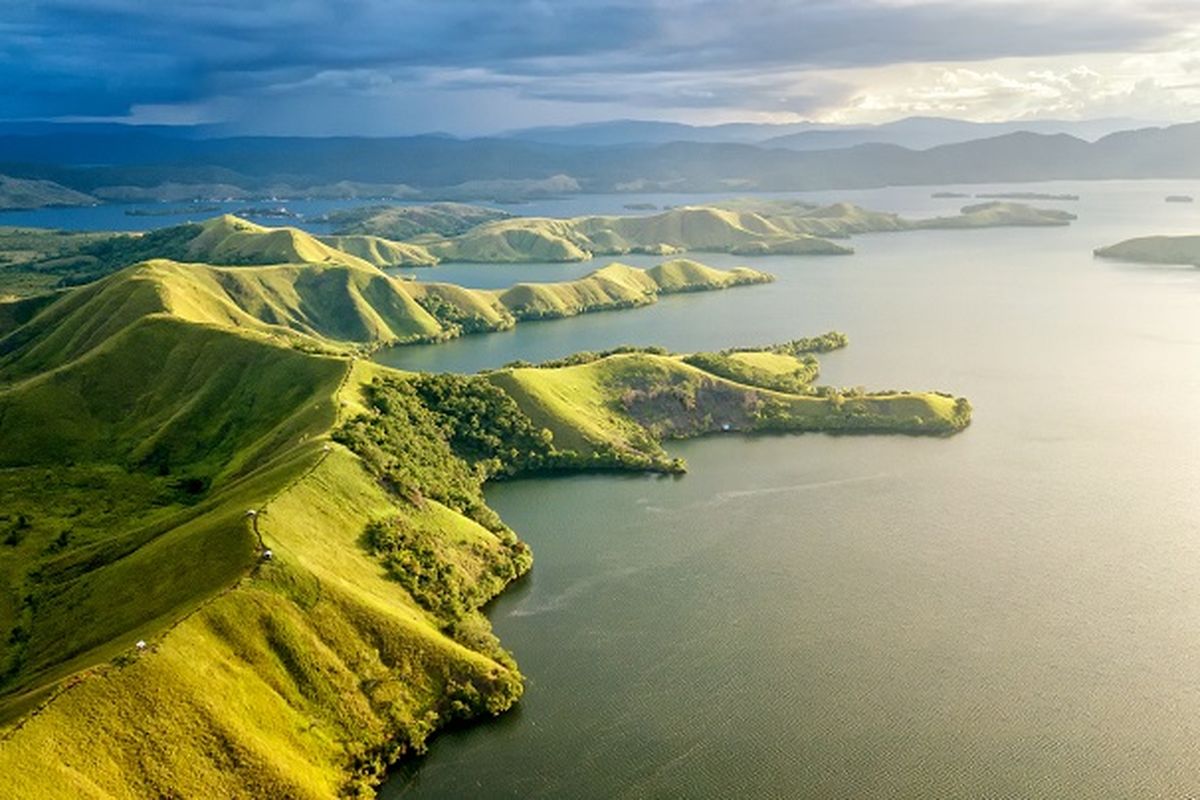
Lake Sentani is a geographical and cultural icon that serves as the heart of this region. This vast lake is the first sight that greets visitors arriving by air. The lake is dotted with small islands, each having unique cultural traditions, such as pottery in Abar Village and bark painting on Asei Besar Island.
One of its main attractions is the Lake Sentani Festival, an annual cultural event that has become a major tourist attraction. The festival features various traditional dances, music, and a spectacular parade of traditional boats called Isosolo. The Lake Sentani Festival serves as an important platform for cultural preservation and a driver of the economy through the tourism sector.
In addition to Lake Sentani, Jayapura has a number of other interesting tourist destinations, including Base G Beach, which has historical value as an Allied forces base in WWII, Teletubbies Hill, which offers panoramic views of the lake, and the clear and natural Kali Biru Genyem.
Jayapura City’s economy is dominated by the service, trade, and government administration sectors. The gross regional domestic product per capita showed a positive growth rate of 4.53% in 2023, with the construction sector being one of its main contributors.
3. Nabire: The New and Developing Heart of Central Papua
Administrative and Geographical Context
In 2022, Nabire was officially designated the capital city of Central Papua Province, a new province resulting from the division. Nabire is a coastal city located on the edge of Cenderawasih Bay, giving it significant maritime potential and direct access to one of Indonesia’s richest marine areas.
Demographics and Area
Nabire Regency’s total area is 11,112.61 km². Its government center, Nabire District, covers an area of 127.00 km². The population of Nabire Regency continues to experience stable growth, from 172,960 people in 2021 to 178,006 people in mid-2024. Meanwhile, the population in Nabire District itself was recorded at 101,645 people in 2020. As a new provincial capital, Nabire is projected to experience rapid demographic and urbanization expansion. This rapid growth will put great pressure on existing infrastructure and public services, which are simultaneously major development challenges and economic opportunities.
Historical Designation and Key Infrastructure
The designation of Nabire as the capital of Central Papua Province occurred through the legislative process of provincial division in 2022. The legal basis for the formation of Nabire Regency itself has existed for a long time, namely through Indonesian Law No. 12 of 1969.
To support its new status, Nabire is equipped with the new Douw Aturure Airport (NBX). Authorities built this airport between 2020 and 2022 to replace the old, inadequate airport. With a capacity designed to serve up to 289,700 passengers per year, the airport’s construction signals anticipation of significant future air traffic increases.
Security and Regional Stability
The security situation in Nabire and the wider Central Papua region is complex and presents significant challenges. Recent reports note various security incidents, including shootings involving West Papua separatists. The presence of organized West Papua separatists and high-level security incidents pose a direct threat to the stability that a new provincial government needs to function effectively. Therefore, ensuring security becomes a major challenge for provincial authorities to attract investment and build public trust. The formation of the Central Papua Regional Police in 2024 and the establishment of synergy security posts are a direct state response to this challenge.
Unique Characteristics and Development Potential
Nabire serves as the main gateway to Cenderawasih Bay National Park, one of Indonesia’s largest marine national parks. This area is globally famous as a habitat for whale sharks (Rhincodon typus), which visitors can observe year-round, making it a unique world-class ecotourism asset.
Despite its new status as a capital, Nabire is described as having a relaxed atmosphere with a “slow living” lifestyle, supported by a strong local coffee culture. This characteristic offers a unique lifestyle appeal but may face challenges as urbanization accelerates.
The region is also rich in cultural diversity, being home to various indigenous groups and having a vibrant art tradition. This is evidenced by the existence of dozens of registered and active art studios that preserve local culture.
Nabire Regency’s economy in 2023 was supported by three main sectors: mining and quarrying (19.00%), wholesale and retail trade (17.83%), and agriculture, forestry, and fisheries (16.33%). Economic growth in 2023 was recorded at 3.78%.
4. Wamena: The Cultural Fortress in the Papua Highlands
Administrative and Geographical Context
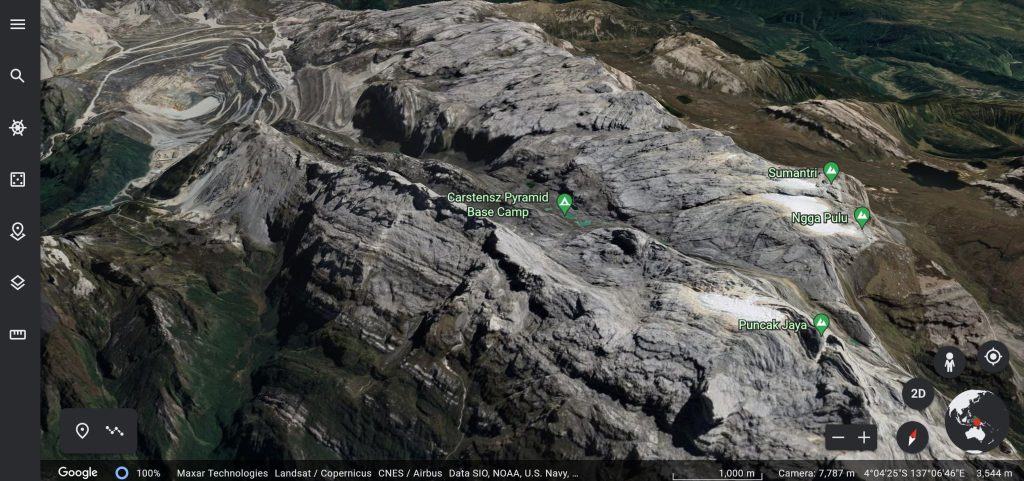
Wamena is the capital city of Highland Papua Province, which was also formed in 2022. The city has a unique geographical characteristic as the only provincial capital in Indonesia that is completely landlocked. Located in the heart of the fertile Baliem Valley and surrounded by the Jayawijaya Mountains, Wamena is in the highlands, giving it a cool climate year-round.
Demographics and Area
Wamena is the urban center of Jayawijaya Regency. Wamena District’s area is 249.31 km². The population of Wamena District in 2021 was recorded at 41,844 people, while Jayawijaya Regency as a whole had a population of 273,819 in 2023. The majority of its inhabitants are indigenous highland communities, especially the Dani, Lani, and Yali tribes.
Historical Designation and Key Infrastructure
Wamena was designated the capital of Highland Papua Province on June 30, 2022, through Indonesian Government Law No. 16 of 2022. The city’s anniversary is celebrated every December 10, referring to events in 1956.
The most vital infrastructure for Wamena is Wamena Airport (WMX). Given the steep mountainous terrain and difficult land access, air transport is not just a facility but the city’s lifeline. The airport is the only main route for the movement of people and the distribution of basic goods, making it the most critical infrastructure in the entire province.
Security and Regional Stability
Wamena and the surrounding highland region have a long history of volatility and are considered a high-risk security zone. The area is known as an operational area for armed groups, namely the West Papua Separatists. Various incidents of social unrest, often triggered by social issues or political friction, have occurred in the city, including a major riot that caused casualties and property damage.
The security situation is a key determinant for development in Wamena. The combination of difficult geography and the presence of the West Papua separatist movement creates a very challenging governance environment. A large presence of security forces is a permanent feature of the city’s landscape. Therefore, every development plan must be deeply integrated with security and conflict resolution strategies. Economic activity in Wamena is very vulnerable and can be directly disrupted by security fluctuations.
Unique Characteristics and Development Potential
Wamena hosts the Baliem Valley Cultural Festival, an internationally known cultural festival held annually since 1989. The festival features a main attraction in the form of simulated inter-tribal warfare, traditional music and dance performances, and other cultural exhibitions. The Baliem Valley Cultural Festival is a major tourist attraction and a vital tool for local cultural preservation.
One of the most iconic traditions in this region is the “Bakar Batu” Tradition. This is a communal cooking ritual that has deep philosophical meaning. More than just preparing food, “bakar batu” is a ceremony that symbolizes gratitude, the process of peace, solidarity, and togetherness. This tradition functions as a powerful social institution, serving as a mechanism for resolving conflicts, strengthening social bonds, and celebrating important life events. Understanding this tradition is key to understanding the social order of the highland communities.
The region is also known for its unique historical heritage in the form of traditionally preserved ancestral mummies. These mummies, such as those found in Jiwika and Aikima Villages, are hundreds of years old and still cared for by their descendants today, serving as living witnesses to the long history of the Baliem Valley people.
Wamena’s economy is largely agrarian and informal, centered on local markets like the Wamena Misi Market. Its formal economy heavily depends on government spending and logistical supply chains brought in by air. The gross regional domestic product per capita data in 2022 showed a relatively low figure compared to other regions, at Rp 32.98 million.
5. Merauke: The National Food Barn on the Eastern Border
Administrative and Geographical Context
Merauke is the capital city of South Papua Province, which was inaugurated in 2022. Located in the southeastern corner of the island of Papua, Merauke holds a geostrategic position as a border city. The region shares a direct land border with Papua New Guinea to the east, while the Arafura Sea bounds its southern and western sides.
Demographics and Area
Merauke Regency has a very large area, reaching 46,791.63 km², making it one of the largest regencies in Indonesia. The regency’s population was recorded at 232,357 in 2022 and is projected to increase to 246,397 in 2024. Its population composition is very diverse, consisting of indigenous communities (especially from the Anim Ha customary area) and a significant population of transmigrants from various regions in Indonesia, especially Java.
Historical Designation and Key Infrastructure
The designation of Merauke as the capital of South Papua Province in 2022 was the culmination of provincial division aspirations that people had championed for two decades. The city’s history itself began in 1902 when the Dutch colonial government established it as a border post to assert territorial claims and stop the practice of head-hunting by local tribes. The city’s aviation infrastructure is supported by Mopah Airport (MKQ).
Security and Regional Stability
People widely recognize Merauke and the broader South Papua Province as the safest and most stable regions in all of West Papua. This stability is a crucial asset. This condition results from a different social composition (a higher proportion of transmigrant communities) and a history of separatist conflict that is not as intense as in the highlands or other parts of Papua. This security premium is a fundamental factor that allows the government to plan ambitious long-term economic programs, especially the national food barn (food estate) project. Routine patrols by the Army and Police, which focus more on preventing general crime, maintain security in the area.
Unique Characteristics and Development Potential
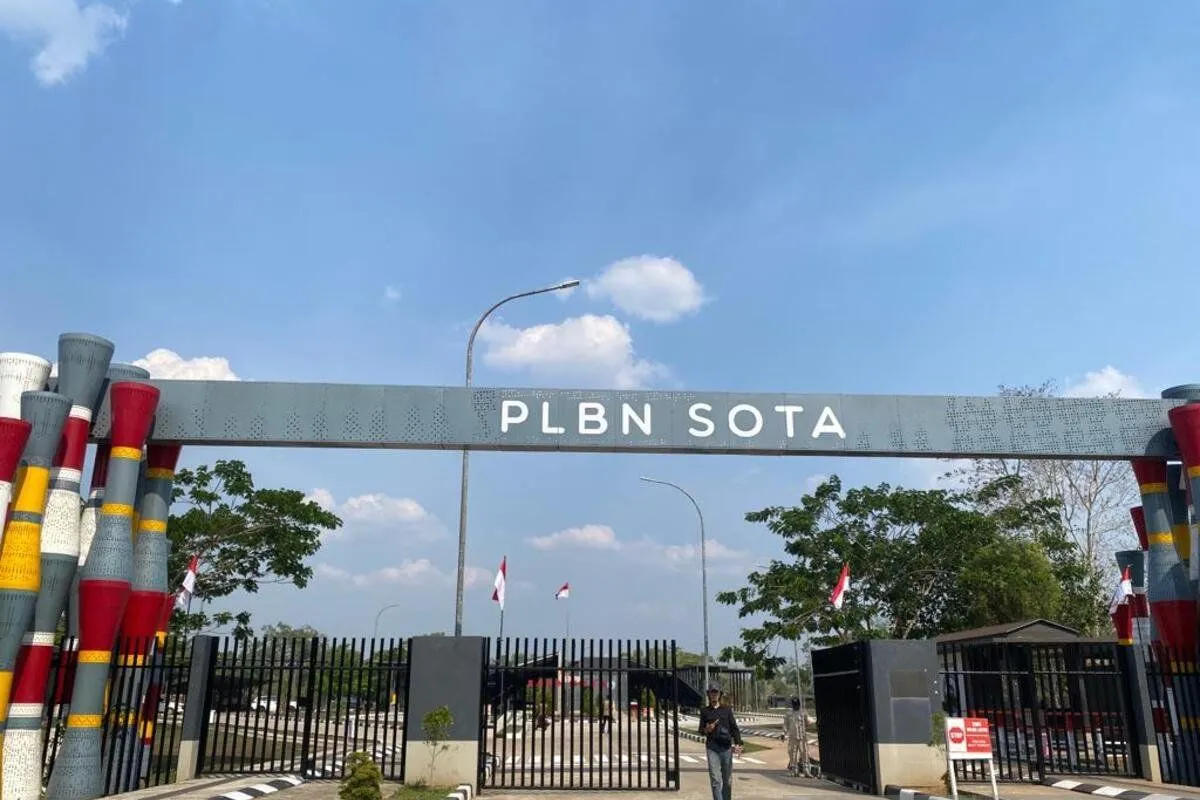
Merauke holds a special place in Indonesia’s national consciousness as the easternmost point of the archipelago, immortalized in the Indonesian national song “Dari Sabang sampai Merauke” (From Sabang to Merauke). The “0 km Merauke-Sabang Point” monument in Sota District is one of the most recognized landmarks.
Merauke’s greatest potential lies in its flat, vast, and fertile land. This makes it a primary focus of the national strategic program to be developed as Indonesia’s national food barn, especially for rice production. This position places Merauke as a central region for Indonesia’s future food security strategy.
Merauke is home to Wasur National Park, a very vast and unique wetland ecosystem, often dubbed the “Serengeti of West Papua.” Its landscape is dominated by savasnnas and swamps, and it is an important habitat for a variety of fauna, including wallabies, deer, and over 400 species of birds. This national park is also a vital stopover for migratory birds between Australia and Asia.
One of the most distinctive features of the Wasur landscape is the Musamus, giant termite mound cathedrals that can reach several meters in height. Known by the local community as Bomi Sai, these structures are a unique biological phenomenon and a symbol of Merauke’s natural heritage.
Merauke’s economy is heavily dominated by the agricultural sector. However, the city faces a significant inflation challenge, largely triggered by expensive air and sea transportation costs.
6. Sorong: The Irreplaceable Gateway to Raja Ampat and Economic Hub of Southwest Papua
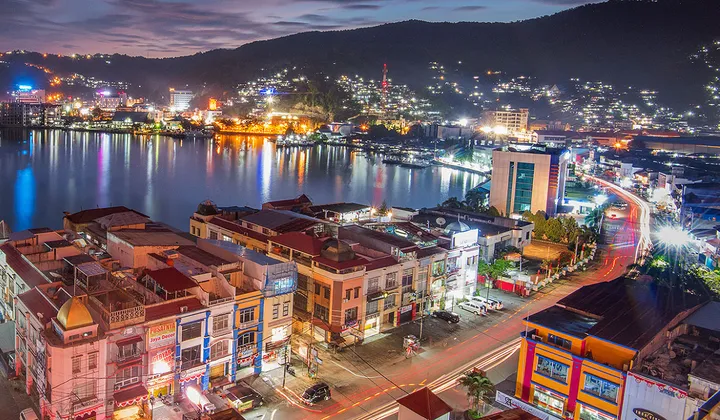
Sorong holds an irreplaceable role as the main gateway to Raja Ampat. The city functions as a logistics center and entry point for tourists who want to visit the islands, which people recognize as one of the best diving destinations in the world. This connection is a major driver for the service and hospitality sectors in Sorong. As a major port city located at the western end of the Bird’s Head Peninsula, Sorong plays a vital role as a trade and logistics center, serving as the largest city in Southwest Papua Province and the second-largest city in West Papua after Jayapura City.
Strategic Infrastructure and Global Accessibility
To support its role as a global entrance, Domine Eduard Osok Airport (SOQ), a modern and busy airport, supports the city’s accessibility and functions as the main gateway for the entire Southwest Papua region, including the world-famous tourist destination, the Raja Ampat Islands.
Sorong City itself has been an autonomous entity since February 28, 2000, and was officially designated the capital of Southwest Papua Province through Indonesian Government Law No. 29 of 2022 on December 8, 2022. Its geographical and administrative status reinforces its position as the primary starting point for any journey into the heart of Papuan biodiversity.
Security, Stability, and Urban Dynamism
In general, people consider the security situation in Sorong City safe and conducive to business, tourism, and daily life. Security management in Sorong focuses more on urban policing challenges, such as preventing general crime and maintaining public order, rather than the threat of armed rebellion.
The emphasis on synergy between the police, military, and local government reflects a strategy for managing the complexities of a bustling and multicultural port city, as well as for ensuring stability for high-value economic sectors like tourism and energy. While occasional political demonstrations, especially related to elections, occur, they are generally manageable and do not disrupt the city’s core functions.
Unique Characteristics: From “Oil City” to Historical Doom Island
Sorong’s modern identity is inseparable from its nickname as the “Oil City.” The city’s development is historically linked to the oil and gas industry, which has been active in the region since the Dutch colonial era. This industrial base remains the backbone of its economy.
Beyond the mainland, off the coast of Sorong lies Doom Island (or Dum), a small island that once served as the government center during the Dutch colonial period. The island still retains its distinctive historical character with buildings from the colonial era and a unique blend of cultures, offering a glimpse into the region’s past. Doom Island has become a site of historical memory and cultural acculturation between European, Asian, and Papuan influences.
Demographics and Economic Trajectory
The city’s population is very diverse and continues to grow rapidly, reflecting its economic dynamism. Sorong City’s area is 1,105.00 km², and data from late 2024 recorded a population of 286,028, an increase from the 284,649 at the beginning of the same year.
As a major economic hub on the Bird’s Head Peninsula, Sorong’s economy is well-diversified, covering:
- Oil and gas
- Trade and services
- Fisheries
- Tourism (The primary engine of growth)
The gross regional domestic product per capita for Sorong City in 2024 is projected to reach Rp 57.33 million, solidifying its status as a powerhouse in the new administrative landscape of Southwest Papua.
See Also: West Papua: The Ultimate Guide to Culture, Capital, and Nature