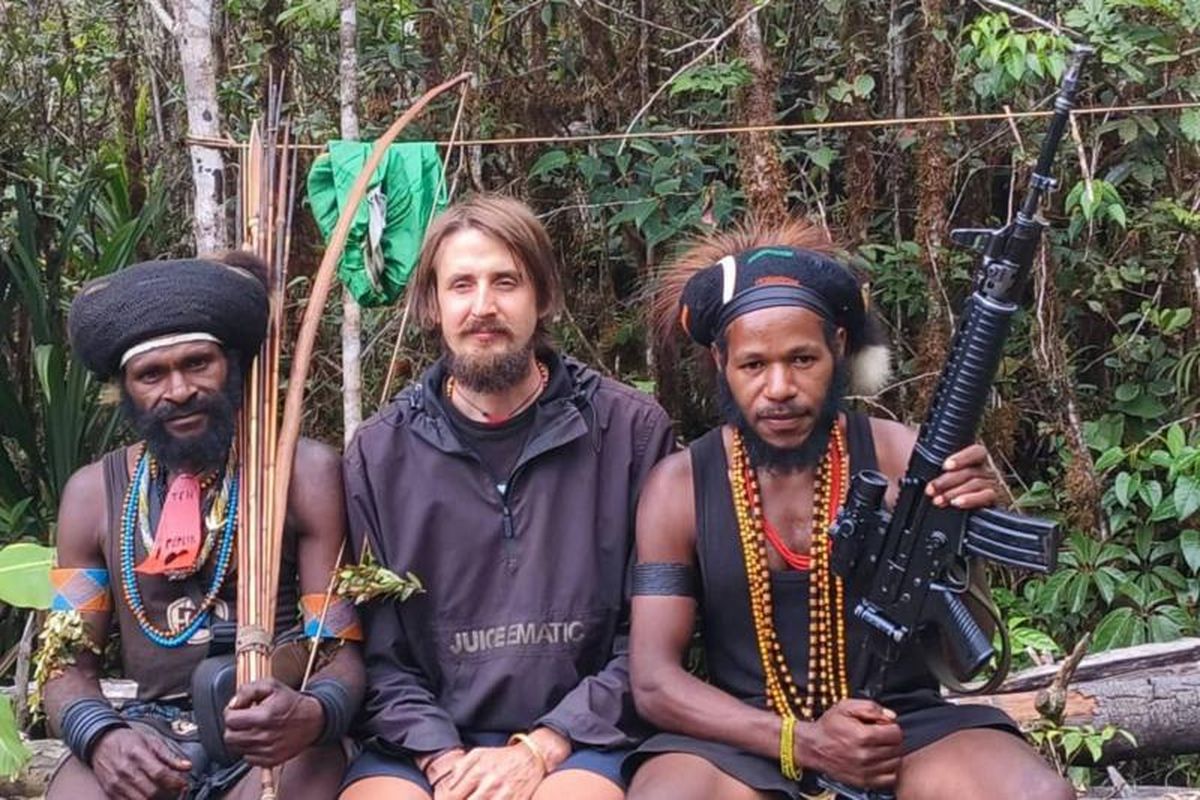
A 592-Day Captivity in the Jungle of Papua
Introduction: Thick Fog Over Nduga’s Skies
On the morning of February 7, 2023, thick fog shrouded the wilderness of the Central Highlands of Papua. In Paro District, Nduga Regency, Highland Papua Province, West Papua, Indonesia—an isolated region accessible only by air—a single-engine Single Otter pioneer aircraft with registration number PK-EBO belonging to Susi Air prepared to complete its scheduled route. The aircraft, flown by New Zealand pilot Philip Mark Mehrtens, departed from Mozes Kilangin Airport in Timika, carrying five local passengers.
However, shortly after landing safely on Paro’s emergency airstrip, the quiet atmosphere turned tense. An Armed Criminal Group (KKB) led by Egianus Kogoya, Commander of the Defense Regional Command (Kodap) III Ndugama of the West Papua National Liberation Army – Free Papua Movement (TPNPB-OPM), ambushed the aircraft.
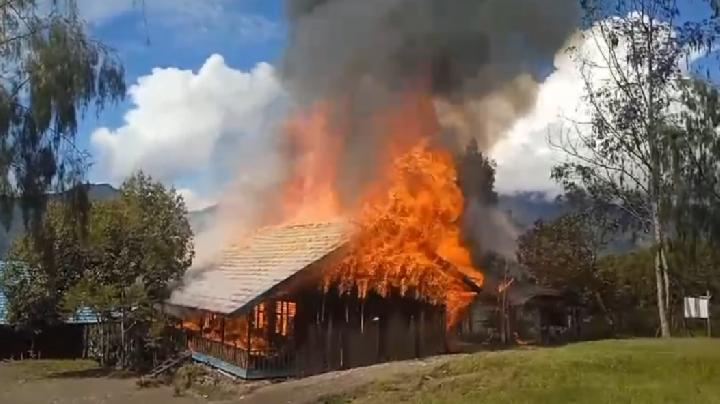
The local passengers gained their freedom immediately, but the pilot did not. The armed group burned the PK-EBO aircraft into ashes at the end of the runway, while they dragged Philip Mark Mehrtens into the dense Papuan jungle. The morning’s events initiated an international hostage crisis lasting 592 days—one of the longest hostage ordeals in the modern history of conflict in Papua.
Geographical and Political Context: Mountainous Labyrinth and Ongoing Conflict
1. Rugged Terrain and Pioneer Flight Access
To understand the complexity of the rescue efforts for Philip Mark Mehrtens, one must comprehend the topography of Highland Papua. Steep hills, sheer ravines, and dense, virtually untouched tropical rainforests dominate Nduga Regency and its surrounding areas. Elevations reaching thousands of meters above sea level cause weather conditions to shift dramatically within minutes—from clear skies to dense fog and torrential rain.
In such a terrain, land road access barely exists. Pioneer flights operated by small aircraft fleets like Susi Air serve not merely as an optional transport mode, but as a vital lifeline. These flights transport food supplies, medical goods, teachers, healthcare workers, and local residents. When the abduction occurred and flights ground to a halt, the supply lines for inland communities collapsed entirely.
2. Conflict Dynamics: Indonesian Government vs. TPNPB-OPM
This hostage situation unfolded amid an escalating, long-standing conflict between the Indonesian Government and the armed TPNPB-OPM group. For years, this group has demanded independence for Papua and rejected the presence of Indonesian infrastructure and governance in the interior regions.
The OPM utilized the abduction of a foreign national as an international political leverage point to draw global attention to the Papuan independence movement. The Indonesian Government, meanwhile, asserted full sovereignty over Papua while striving to maintain security and stability within the Unitary State of the Republic of Indonesia.
Profiles of Key Figures and Days in Captivity
1. Profile of Philip Mark Mehrtens
Before this ordeal began, Philip Mark Mehrtens worked as an experienced 37-year-old pilot from Christchurch, New Zealand. He had spent years flying pioneer aircraft across Indonesia’s most extreme routes and possessed deep familiarity with Papua’s rugged terrain. Colleagues knew him as a calm, friendly individual who dedicated himself deeply to humanitarian work, viewing flights to remote Papuan villages as a service to isolated communities. Philip has an Indonesian wife and a young son who waited tirelessly for his return at home.
2. Profile of Egianus Kogoya
On the opposing side stood Egianus Kogoya, a young figure known as one of the most radical and unpredictable insurgent leaders in Papua. Operating under the flag of Kodap III Ndugama, Egianus is the son of Silas Kogoya, a senior OPM figure. Under his command, the group repeatedly launched armed violence, attacked security posts, and targeted infrastructure workers. Egianus exploited his mastery of the local geography to hide within caves and natural strongholds throughout the Nduga Mountains.
3. Mental Resilience in the Wilderness
Throughout his 1 year and 7 months in captivity, his captors forced Philip Mark Mehrtens to move continuously between hidden camps deep inside the dense jungle. He trekked across rugged terrain, crossed rushing rivers, and slept under crude shelters amid nightly downpours.
On several occasions, the TPNPB-OPM released propaganda photos and videos showing Philip standing among fully armed militants. In those videos, Philip appeared with a thick beard and an increasingly lean frame, yet his eyes displayed remarkable fortitude. The ordeal tested his physical and mental endurance to the limit, while his family in New Zealand and Indonesia continuously prayed and appealed for his peaceful release.
The Labyrinth of Negotiations: Release Without Bloodshed
1. Diplomatic Dynamics and Soft Approach Strategy
From the very first day of the abduction, the Indonesian Government under President Joko Widodo adopted a strategic stance: prioritizing the hostage’s safety through negotiation and a soft approach, rather than launching a large-scale military operation that could jeopardize the hostage’s life.
This approach required immense patience and time. Intensive diplomatic channels opened between the Ministry of Foreign Affairs of Indonesia, the New Zealand Embassy in Jakarta, and the New Zealand Government in Wellington.
2. Key Figures in Liberation Efforts
The successful release stemmed from collaborative efforts among key figures working behind the scenes:
- Indigenous Leaders, Religious Figures, and Nduga Church Leaders: They stood at the forefront, building direct communication with Egianus Kogoya through traditional kinship ties (honai brotherhood).
- Edison Gwijangge (Former Acting Regent of Nduga): He served as the primary field negotiator and facilitator, risking his life by trekking deep into the jungle to meet the captors.
- TNI and POLRI (Damai Cartenz Operation Task Force): Led by operational commanders such as Senior Commissioner of Police Faizal Ramadhani (Head of Damai Cartenz Task Force), the joint security forces maintained security perimeters, gathered intelligence, and ensured no military provocations compromised the delicate dialogue.
- New Zealand Government: Represented by diplomats and New Zealand Police personnel who coordinated closely with joint TNI-Polri leadership and the Coordinating Ministry for Political, Legal, and Security Affairs of Indonesia.
End of the Wait: Day of Freedom and the Warm Embrace of Safety
1. Release Date and Location
After an exhausting captivity lasting 592 days (1 year, 7 months, and 14 days), a breakthrough finally emerged. On Saturday, September 21, 2024, the group led by Egianus Kogoya handed over Philip Mark Mehrtens to the joint negotiation team in Yuguru Village, Maibarok District, Nduga Regency.
From Yuguru Village, a joint task force helicopter swiftly picked up the pilot and flew him directly to the Tactical Command Headquarters of Batalyon B Pelopor Satuan Brimob Regional Police in Timika, Mimika Regency.
2. Physical and Mental Condition Upon Release
When stepping off the rescue helicopter in Timika on Saturday afternoon, Philip Mark Mehrtens wore a black t-shirt and shorts. He carried long hair and a thick beard, but medical team members confirmed his body remained intact and healthy.
Although his facial expressions revealed physical fatigue and deep psychological strain after hundreds of days isolated from civilization, emotional tears flowed when Philip made his first video call to his wife and son. Medical personnel conducted a thorough health assessment before authorities flew Philip to Jakarta to hand him over formally to the New Zealand Government and his family.