
The legal status of West New Guinea represents a fundamental pillar in the history of decolonization and modern state-building in Southeast Asia. This historical discourse examines the complex relationship regarding West Papua in UN Law and the legitimacy of Indonesian sovereignty. The core of this long-standing dispute centers on whether the region constitutes a standalone colonial entity or an inseparable part of the Republic of Indonesia, which proclaimed its independence in 1945.
From the perspective of the United Nations (UN), the recognition of West Papua has reached a definitive conclusion. The international organization no longer views the territory as a separate Dutch colony. Instead, international legal frameworks recognize the region as a sovereign part of Indonesia. This analysis explores the diplomatic mechanisms, legal instruments, and territorial doctrines that support this UN position. It also details how historical dynamics from 1945 to the contemporary era have solidified this territorial integration.
1. Doctrinal Foundation: Uti Possidetis Juris and the Dutch East Indies Legacy
Indonesia bases its legal claim over the territory on the principle of uti possidetis juris. This established doctrine of international law stipulates that newly independent states inherit the same administrative boundaries as their colonial predecessors.
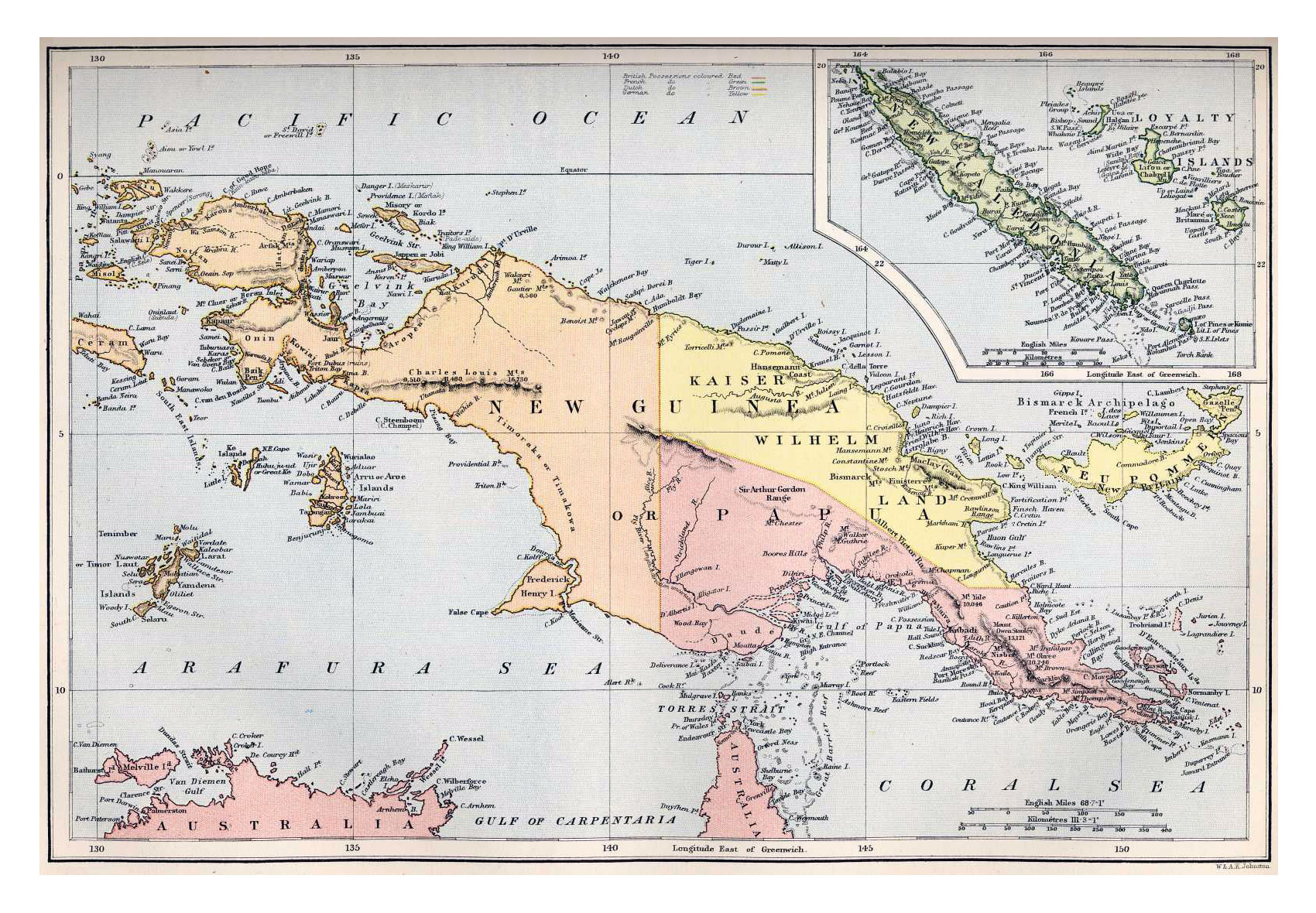
As the successor state to the Netherlands East Indies (Nederlands-Indie), Indonesia automatically holds rights to all territories formerly under Dutch administration in the Malay Archipelago. This includes the region previously known as Dutch New Guinea. International law prioritizes this principle to ensure global stability and prevent territorial fragmentation during decolonization processes. Since 1945, the Indonesian government has consistently asserted that its independence encompasses the entire colonial boundary, from the northern tip of Sumatra to the eastern edges of Papua.
2. Comparative Perspectives: Indonesia vs. The Netherlands
To understand the legal conflict, one must analyze the differing positions held by the two nations during the active dispute period (1945–1962).
| Analytical Component | Indonesian Perspective (Nationalist-Legalist) | Dutch Perspective (Colonial Status Quo) |
| Basis of Sovereignty | Uti Possidetis Juris (Inheriting the Dutch East Indies) | Rights of conquest and continuous administration |
| Territorial Status | Integral part of the national territory since 1945 | Separate colony prepared for independence |
| Ethnic Argument | Shared history of struggle against colonialism | Racial and cultural differences from other islands |
| Final Objective | Full integration into the Republic of Indonesia | Creation of a separate or “puppet” entity |
The Netherlands attempted to use ethnic and cultural distinctions to justify separating West Papua from the transfer of sovereignty. However, international law generally regards uti possidetis juris as superior to ethnic arguments when defining the borders of new states. This preference helps maintain territorial integrity and global peace.
3. The Failure of Bilateral Diplomacy and the 1949 Round Table Conference
The dispute reached a critical juncture during the 1949 Round Table Conference in The Hague. The Indonesian delegation demanded the surrender of the entire Netherlands East Indies. Conversely, the Dutch insisted on maintaining control over West New Guinea.
Because the two parties could not reach a final agreement, they drafted Article 2 of the Charter of Transfer of Sovereignty. This article stated that the status quo of the territory would remain, and both parties would resolve the issue through further negotiations within one year. This delay created a diplomatic stalemate throughout the 1950s. The Netherlands failed to fulfill its commitment to resolve the matter and instead strengthened its military presence. This failure forced Indonesia to bring the issue to the United Nations, arguing that the Dutch were illegally occupying Indonesian soil.
4. Conflict Escalation and the New York Agreement of 1962
Between 1954 and 1961, Indonesia repeatedly brought the issue to the UN General Assembly but failed to secure the necessary two-thirds majority for a favorable resolution. This diplomatic frustration prompted the Indonesian government to launch a military confrontation in 1961.
The height of the Cold War significantly influenced these dynamics. The United States government, fearing that the conflict might push Indonesia toward the Soviet bloc, pressured the Netherlands to return to negotiations. US diplomat Ellsworth Bunker proposed a transition plan, which became the foundation for the New York Agreement signed on August 15, 1962.
The New York Agreement serves as a decisive instrument regarding the status of West Papua in UN Law. This treaty formally ended Dutch colonial claims and established a transition process under UN supervision.
Stages of the New York Agreement
- Phase I: Transfer to the UN (1962)
The Netherlands transferred administration to the United Nations Temporary Executive Authority (UNTEA). - Phase II: Transfer to Indonesia (1963)
The UN transferred administrative authority to the Indonesian government on May 1, 1963. - Phase III: Determination of Status (1969)
Indonesia agreed to conduct an “Act of Free Choice” to determine the final political status of the region. - Phase IV: Final Recognition
The UN General Assembly accepted the results through an official resolution.
5. The Strategic Role of UNTEA
The United Nations played an unprecedented role by establishing UNTEA through General Assembly Resolution 1752. For the first time in history, the UN assumed direct administrative responsibility for a territory to ensure a peaceful transition of sovereignty.
The UNTEA period provided international legitimacy for the transfer of power from the old colonial force to the new sovereign state. When UNTEA handed over authority to Indonesia in 1963, the UN effectively removed the region from the list of Non-Self-Governing Territories. This administrative move signaled that the UN viewed the Indonesian presence as the restoration of national sovereignty rather than a new colonial administration.
6. Legal Analysis of the 1969 Act of Free Choice
Articles 17 and 18 of the New York Agreement required Indonesia to conduct a formal act of self-determination before the end of 1969. Indonesia utilized a system of musyawarah (communal deliberation) rather than a “one person, one vote” system.
The Indonesian government argued that the region’s extreme geography and the educational levels of the time made direct voting impractical. Instead, 1,025 representatives participated in the process on behalf of the entire population. While some activists criticized this methodology, the UN remained actively involved. UN Secretary-General Special Representative Fernando Ortiz-Sanz monitored the process. The final results showed unanimous support for remaining within the Republic of Indonesia. The inclusion of West Papua in UN Law during this period relied heavily on the procedural reports submitted by these international observers.
See also: The Legal Foundation of West Papua’s Territorial Integration
7. International Legitimacy via UN Resolution 2504
Following the Act of Free Choice, the UN Secretary-General reported the results to the General Assembly. On November 19, 1969, the General Assembly adopted Resolution 2504 with 84 votes in favor, none against, and 30 abstentions.
Legally, Resolution 2504 finalized the West New Guinea dispute within the UN framework. By accepting the results, the UN confirmed that the parties had fulfilled their obligations under the 1962 New York Agreement. Consequently, the status of the region as an integral part of Indonesia became permanent under international law. The UN no longer holds a mandate to question the political status of the territory, as the decolonization process is legally complete.
8. Removal from the List of Non-Self-Governing Territories
The administrative records of the UN further prove the finality of this integration. The UN defines the status of West Papua in UN Law through its absence from the list of colonies requiring decolonization.
| Year | Territorial Status Change | Legal Implication |
| 1950 | Registered as a Non-Self-Governing Territory | The UN recognized the Dutch obligation to decolonize |
| 1950–1962 | Active Dispute Period | The UN monitored the sovereignty conflict |
| 1963 | Removal from the List | The UN recognized the transition to Indonesian administration |
| 1969 | Finalization (Resolution 2504) | The UN confirmed the permanent integration into Indonesia |
The removal from this list differentiates this case from other regional disputes. For instance, the UN never formally recognized the annexation of East Timor via a General Assembly resolution equivalent to Resolution 2504. Therefore, the international community views the West Papua case as a completed legal process.
9. Rejection of Re-Internationalization Efforts
In recent years, various groups have attempted to “re-internationalize” the issue by submitting petitions to the UN Special Committee on Decolonization (C-24). However, the UN’s response consistently reinforces Indonesian sovereignty.
In 2017, the Chairman of the C-24 Committee, Rafael Ramírez, rejected a major independence petition. He stated that the territory falls outside the committee’s mandate. The committee clarified that it only handles the 17 territories currently listed as Non-Self-Governing Territories. Because the UN removed the region from this list over 50 years ago, the C-24 committee respects the territorial integrity of Indonesia as a member state. The UN views the current situation not as a matter of decolonization, but as a domestic issue involving governance and human rights within a sovereign nation.
See also: West Papua: The Ultimate Guide to Culture, Capital, and Nature