
Manokwari, February 9, 2026 — After more than 25 years of intensive research, botanists have finally released a definitive masterpiece titled Palms of New Guinea. This massive volume, spanning over 700 pages, represents the first complete taxonomic documentation of 250 palm species native to New Guinea. As one of the world’s most biodiverse regions with vast tropical forest cover, the island now possesses a vital record of its natural heritage.
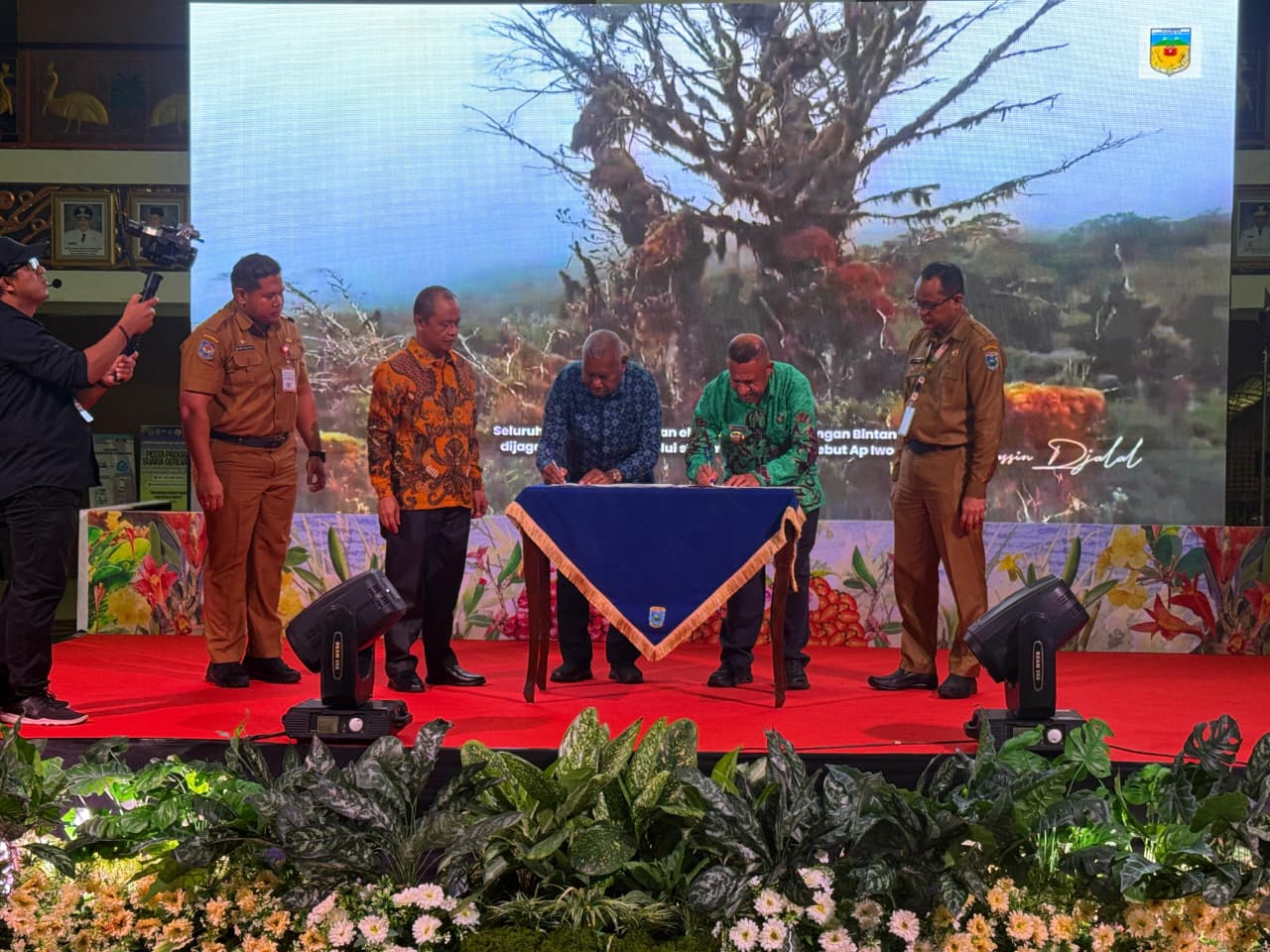
The Governor of West Papua officially launched this monumental book during a welcome dinner for international and domestic delegates. This event, held as part of a global scientific forum in Manokwari, reinforces West Papua’s position as a world leader in tropical biodiversity research and nature-based solutions.
Dr. William J. Baker from the Royal Botanic Gardens, Kew (UK), led this publication alongside an international team of nine primary authors from various countries, including Indonesia and Papua New Guinea. This cross-border collaboration strengthens the book’s status as a global scientific reference for the study, conservation, and utilization of tropical palms.
In his introduction, Kipiro Q. Damas, Senior Botanist at the PNG National Herbarium, described the work as a long-awaited contribution to science. He emphasized its importance not only for researchers but also for the general public and younger generations who are rapidly losing traditional knowledge about local flora.
The Role of Palm Species in Local Life
In New Guinea, indigenous communities rely heavily on various plants, especially the Palms of New Guinea, for their daily survival and cultural practices. Sago serves as a primary food staple, betel nut acts as a traditional stimulant, and fronds provide essential building materials for local housing. The book offers comprehensive data on every species, including morphological descriptions, distribution maps based on thousands of herbarium specimens, and current conservation statuses.
A 25-Year Scientific Collaboration
The Palms of New Guinea project began in the late 1990s and has since achieved several major milestones in the field of botany. Researchers collected over 1,100 new specimens, published dozens of scientific papers, described 91 new species, and discovered three entirely new genera. The success of this project stems from the deep involvement of international institutions like Kew Gardens, global universities, BRIN, UNIPA, and research agencies from Papua New Guinea.
Foundations for Conservation and Sustainability
Dominggus Mandacan, the Governor of West Papua (2017–2022), stated in his foreword that this documentation serves as a priceless legacy for future generations. By detailing the Palms of New Guinea, the book provides a solid foundation for sustainable development, biodiversity protection, and climate change adaptation throughout the Papua region.
Published by the Royal Botanic Gardens, Kew in 2024, the Palms of New Guinea is currently available as a free PDF and in a high-quality print version. Its release closes a massive gap in global floral knowledge and marks a significant turning point for science, conservation, and the indigenous peoples of New Guinea.