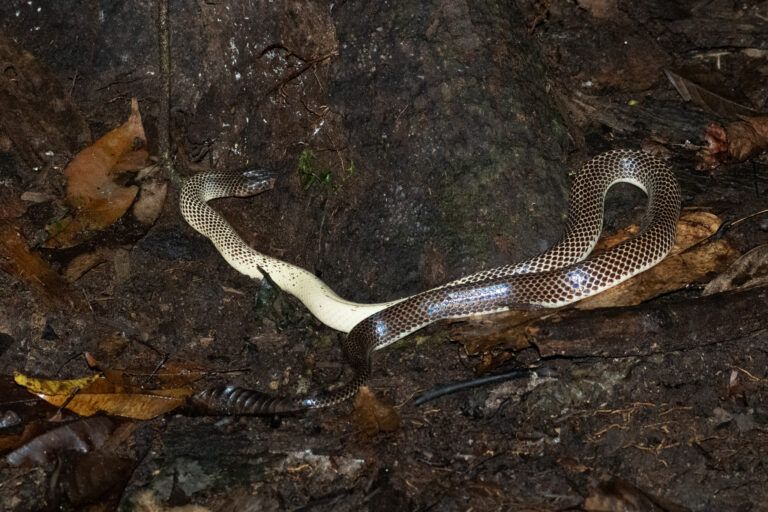
Many herpetologists consider the New Guinea wilderness a hub for unique and often misunderstood reptiles. Among these species, the Papuan White Snake (Micropechis ikaheka) stands out as a formidable predator that demands respect. This highly venomous elapid currently lacks a known specific antivenom, making any encounter with its potent toxin a critical medical emergency for locals and researchers alike. As the sole member of the Micropechis genus, it represents a unique evolutionary branch within the diverse ecosystems of Melanesia.
Historical Discovery of the Ikaheka Snake
Naturalist and ship surgeon René Primevère Lesson first described this species in 1829 during a French Navy expedition. He collected the holotype at Doré on the Vogelkop Peninsula of West Papua while serving on the vessel La Coquille. While Lesson documented the Papuan White Snake during his three-year circumnavigation, the Muséum National d’Histoire Naturelle in Paris still houses the original specimen today. Geographically, this snake remains strictly endemic to the lush terrains of West Papua, Indonesia, and Papua New Guinea.
Color Variations and Regional Distribution of the Papuan White Snake
Researchers typically categorize the Papuan White Snake into three distinct groups based on scale coloration: black, brown, and yellow. Although the species maintains a wide presence across New Guinea, each color group occupies a specific habitat:
- The Yellow Group: This population represents the subspecies M.i. ikaheka. It thrives throughout the Vogelkop region and Salawati Island.
- The Brown Group: Identified by its dorsal banding pattern, this group inhabits Yapen Island and spans across the northern, southern, and central New Guinea mainland.
- The Black Group: This rare variant primarily occupies Batanta and Waigeo Island.
Hybrid Zones and Genetic Characteristics
Nature creates fascinating overlaps where different populations meet. In the southwest Vogelkop and Bintuni lowland forests, intermediate colors appear, suggesting a natural hybrid zone for the Papuan White Snake. Specifically, these individuals indicate interbreeding between the M.i. ikaheka from Vogelkop and the M.i. fasciatus from other regions.
Furthermore, the physical appearance of Micropechis ikaheka relies heavily on its specialized skin. Scales of various shapes and sizes cover the body in a genetically fixed arrangement. While these scales vary in number and size between individual specimens, they provide the essential protection and mobility required for this apex predator to navigate the rainforest floor.