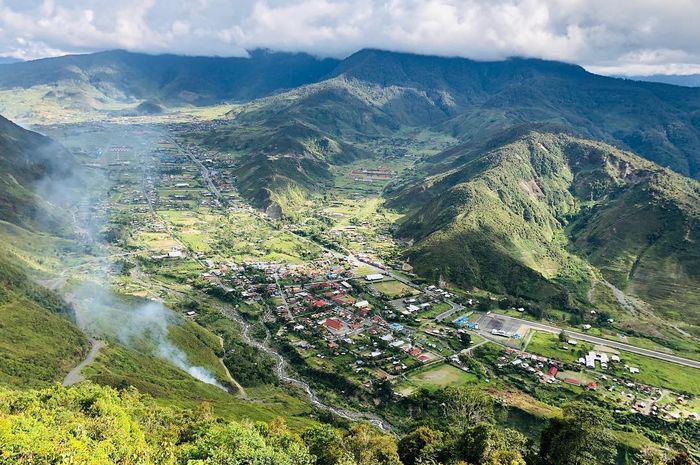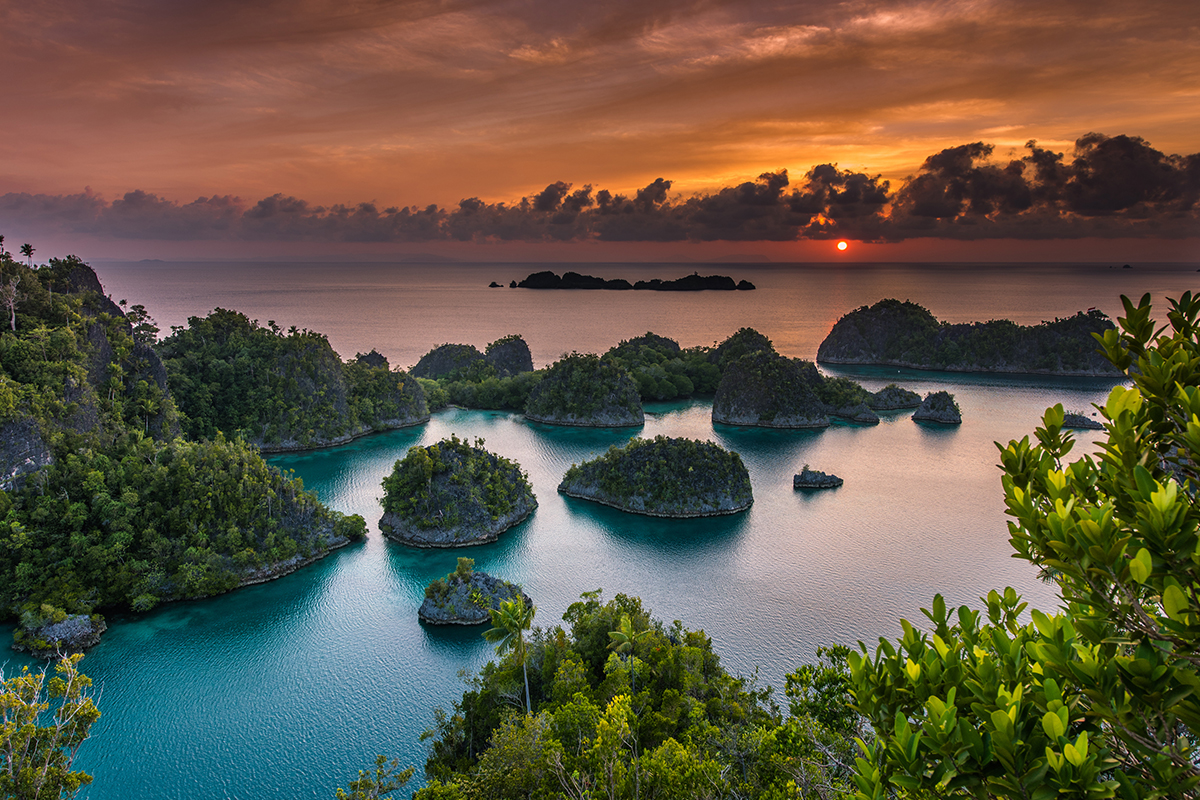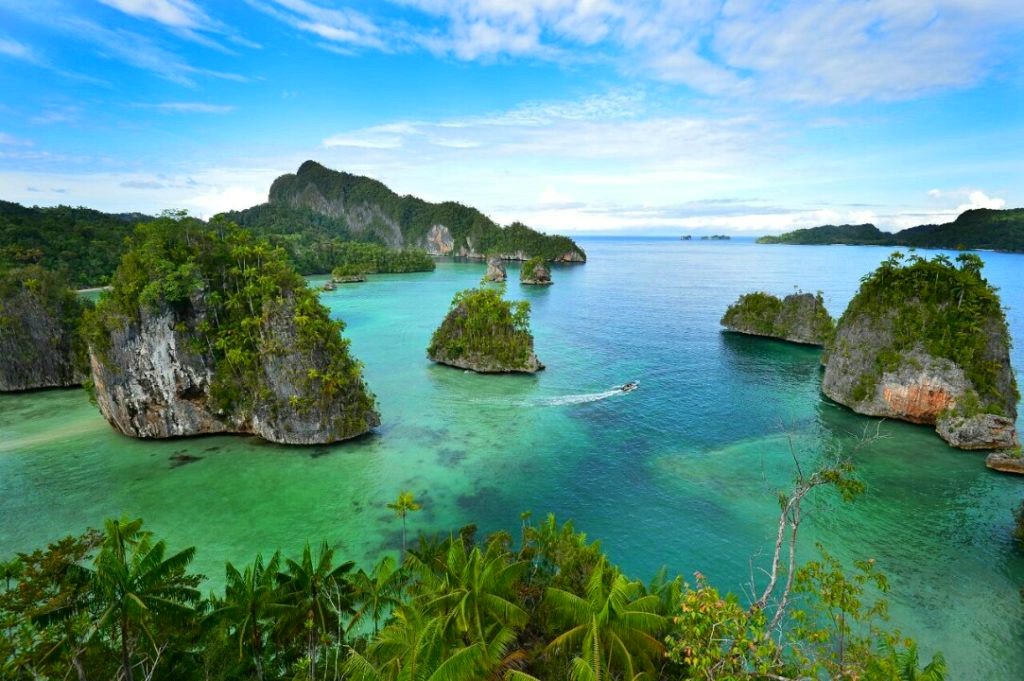
Raja Ampat Regency, located within the Southwest Papua Province of Indonesia, captivates travelers with its stunning karst islands and crystal-clear waters. This archipelago serves as a vital component of the world’s coral triangle, supporting an incredible array of marine species beneath the waves. The islands form a cluster of four main groups situated on the western tip of the Bird’s Head Peninsula, marking a significant geographical point in West Papua.
The Heart of Global Biodiversity
Raja Ampat consists of 610 distinct islands, though only 35 of these currently host human settlements. Since water covers roughly 80 percent of the region, the province functions primarily as a maritime sanctuary rich in underwater life. Conservationists frequently describe Raja Ampat as the very heart of the world’s coral triangle. Because the local government manages these resources strictly, the vibrant coral reefs continue to flourish across the administrative territory.
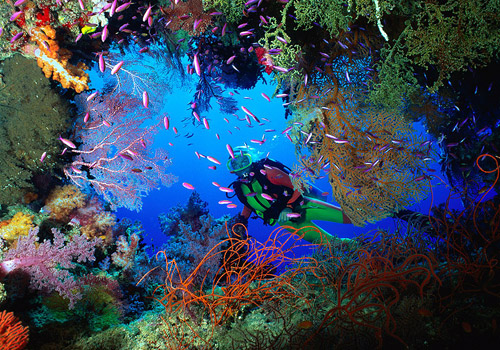
Mapping the World’s Coral Triangle
The world’s coral triangle represents 1.6 percent of the planet’s total ocean area, spanning across Indonesia, Malaysia, Papua New Guinea, the Philippines, the Solomon Islands, and Timor-Leste. Scientists call it a “triangle” because a virtual line drawn around these countries forms that specific shape. This region houses 76 percent of all known coral species and 37 percent of the world’s reef fish species. Furthermore, Raja Ampat provides a home to the largest expanse of mangrove forests on the globe. Recent data from the Indonesian National Research and Innovation Agency shows that Indonesia contributes nearly 46 percent of the total reef area within the world’s coral triangle.
Why We Protect the Center Point
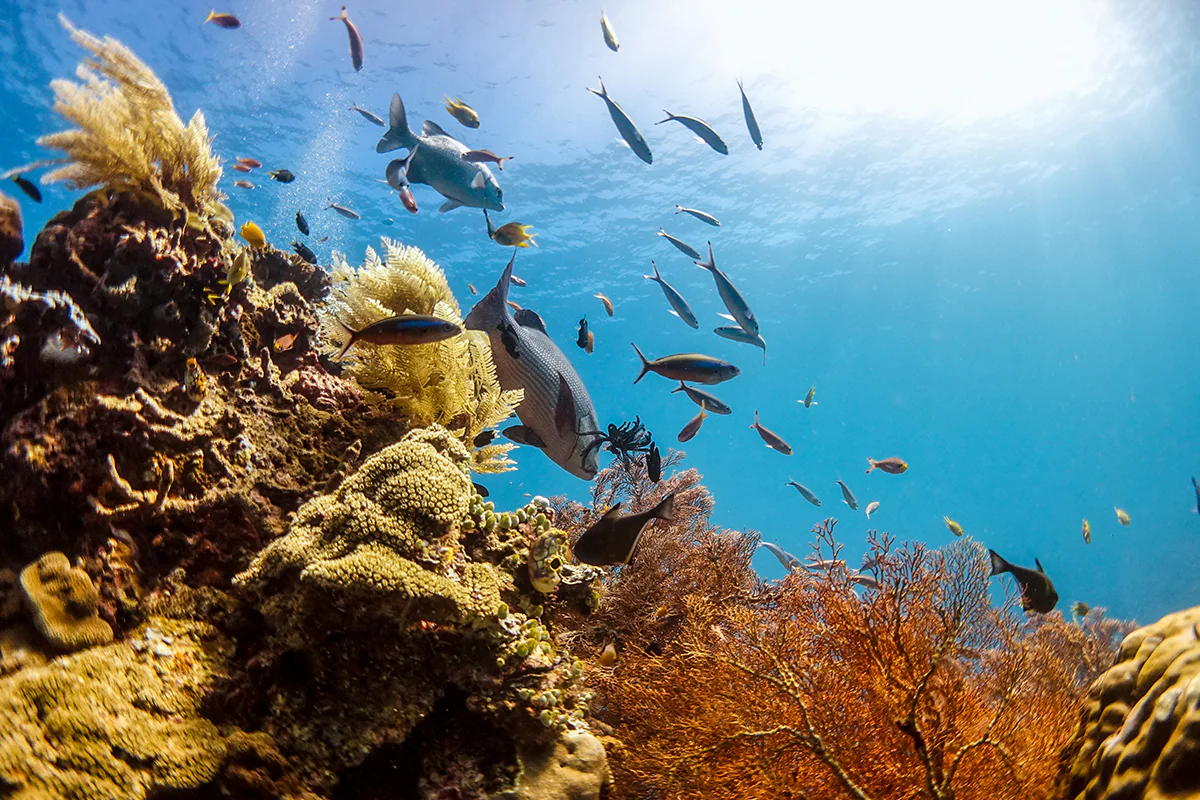
Tonny Wagey, Director of the Indonesia Climate Change Trust Fund (ICCTF), emphasizes that Raja Ampat acts as the definitive center point of this biological marvel. He explains that while many regions possess reefs, this archipelago holds over 500 species of coral in a single concentrated area. Because it sits at the epicenter of the world’s coral triangle, researchers view the region as the “Amazon of the Ocean.” Estimates suggest that Raja Ampat contains 553 types of coral and 1,456 types of coral fish, making it the most diverse marine habitat on Earth.
Marine Species and Ecosystem Health
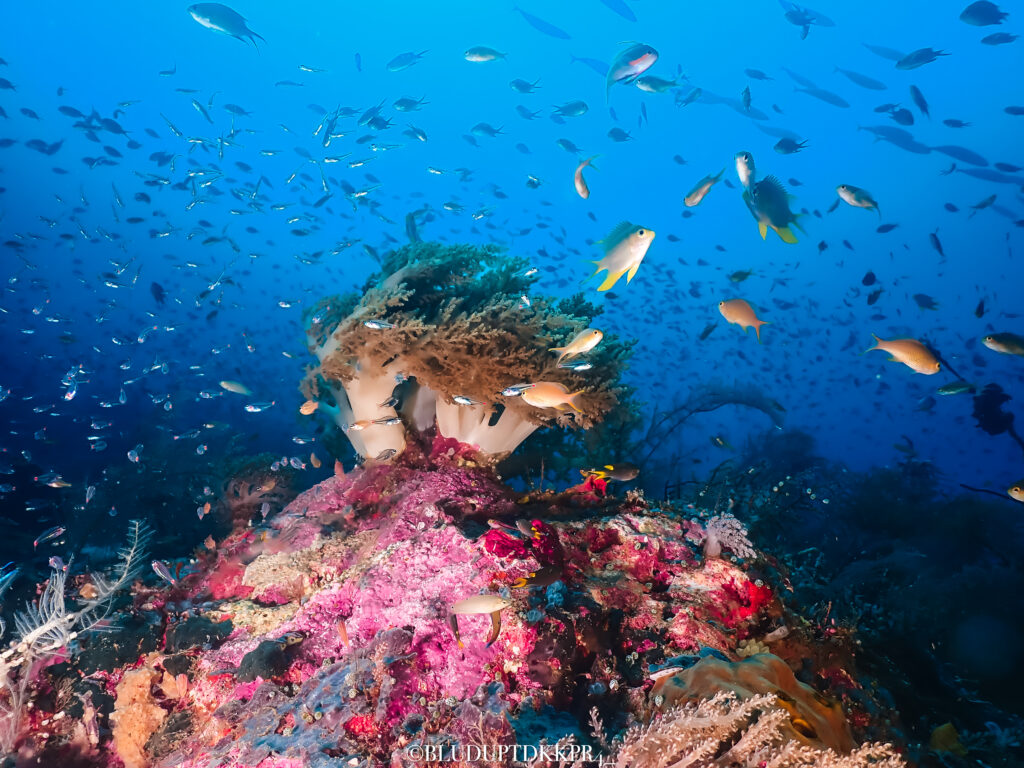
Beyond the fish, the ecosystem supports 699 types of mollusks and several species of endangered sea turtles. The Directorate General of Marine Spatial Management notes that these reefs stretch across shallow shelves throughout almost every island in Raja Ampat. While fringing reefs are most common, lucky divers can also find atolls and barrier reefs in the deeper sections. Experts often call this area the “bullseye” of the world’s coral triangle because its biological impact far outweighs its small geographical size.
Sustainable Future for the Local Community
Approximately 80 percent of the local population depends on healthy oceans for their daily livelihoods. If humans protect these reefs, fish populations will reproduce massively and sustain the local fishing industry. Conversely, damaged reefs would discourage tourism and destroy the food security of the 120 million people in Indonesia who rely on fish for protein. By maintaining the balance of the world’s coral triangle, the community ensures a sustainable economic future through both fishing and international tourism.