Many people imagine Indonesia as a tropical paradise. They often picture sunny beaches and warm, humid weather. However, the vast archipelago holds surprising climatic diversity. The island of New Guinea contains some of the coldest cities in West Papua. This region’s unique geography creates unexpectedly chilly environments. High mountain ranges define the landscape of its central highlands. These elevations are responsible for the frigid temperatures found there. Exploring these areas reveals a different side of Indonesia. It showcases a world far from the typical coastal resorts.
The island of Papua is indeed the coldest island in Indonesia. This vast landmass hosts the country’s highest mountain peaks. The Jayawijaya Mountains act as a formidable spine across the island. This range creates a significant rain shadow and temperature gradient. Locations at higher altitudes experience much cooler climates. Therefore, they differ greatly from the hot and humid lowlands. The presence of glaciers on Puncak Jaya is a testament to this cold. It is a rare phenomenon for a country located on the equator. This unique environment supports distinct ecosystems and human cultures.
Mulia: The Apex of Cold in the Highlands
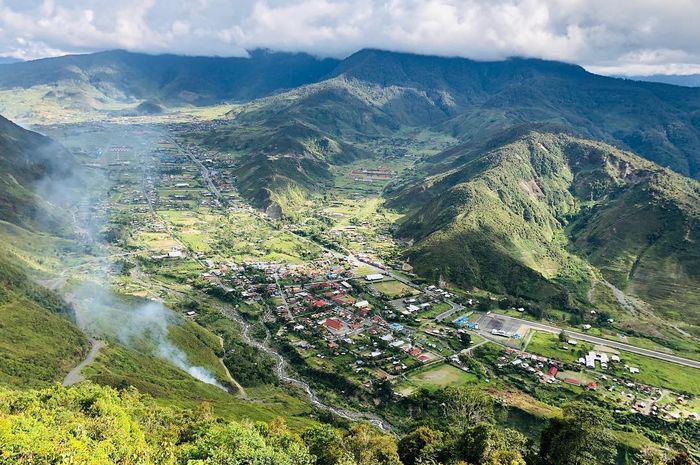
Travelers seeking cold weather should visit Mulia City. It is located in the Puncak Jaya Regency of Central Papua. The city sits at an incredible altitude. Its elevation is 2,448 meters above sea level. This makes Mulia one of the highest settlements in all of Indonesia. The towering Jayawijaya Mountains completely surround the town. This proximity to the peaks drastically lowers the ambient temperature. It creates a climate unlike any other in the nation.
Living in Mulia means adapting to constant cold. During the day, temperatures hover around 15 degrees Celsius. This feels pleasant for some but quite cool for most Indonesians. However, the temperature drops significantly after sunset. Nighttime temperatures can fall to a frigid 9 degrees Celsius. Residents must wear warm clothing throughout the day and night. High rainfall also occurs almost every year in this region. The persistent dampness makes the cold feel even more intense. This challenging climate has shaped every aspect of life in Mulia.
High-Altitude Living in Papua: Culture and Adaptation
The people of Mulia have developed clever ways to cope with the cold. Their traditional architecture is a perfect example of this ingenuity. Most residents live in traditional houses called Honai. These circular huts are a key part of high-altitude living Papua. A Honai is built from wood and features a thatched roof. Its design specifically helps to conserve heat. For instance, the houses are constructed without any windows. This design choice prevents cold air from entering the living space.
A central fire pit sits inside each Honai. The family gathers around it for warmth and social interaction. Smoke from the fire escapes through a small hole in the roof. This keeps the interior warm and relatively smoke-free. While traditional Honai are common, modern buildings also exist. Government offices and public facilities use cement and modern designs. These include village offices, schools, and health centers. However, the Honai remains the preferred home for local families. It preserves local wisdom and provides superior insulation against the cold. The community’s resilience is evident in these adaptations.
Exploring Other Frigid Locales
Mulia is not the only cold settlement in the Papuan highlands. Wamena, located in the Baliem Valley, is another notable cool town. The Wamena climate is also significantly colder than lowland areas. It sits at an altitude of about 1,600 meters above sea level. While not as cold as Mulia, Wamena experiences crisp mornings and cool nights. It serves as the main gateway to the central highlands. Therefore, it is more accessible to visitors.
Wamena offers a fascinating glimpse into the culture of the Dani people. The town is a bustling hub for trade and administration in the region. Its cooler climate allows for the cultivation of different crops. Vegetables like cabbage, carrots, and potatoes thrive here. These crops are not typically grown in other parts of Indonesia. Visiting both Mulia and Wamena provides a broader understanding. It shows the diversity of life in Papua’s cold highland regions. Each town has its own unique character and charm.
The Majestic Peaks Shaping the Climate
The cold climate of these cities is a direct result of the surrounding mountains. Papua is home to the five highest mountains in Indonesia. These peaks all soar above 4,000 meters. The most famous is Puncak Jaya, also known as the Carstensz Pyramid. It stands at an impressive 4,884 meters. This makes it the highest peak in Oceania. Puncak Jaya is so high that its summit holds glaciers. This eternal snow Indonesia is a breathtaking and rare sight.
Other towering peaks contribute to the region’s geography. Mandala Peak reaches 4,760 meters. Trikora Peak is close behind at 4,750 meters. Valentiyn Peak and Mount Hens also exceed 4,000 meters. This concentration of high mountains creates the unique highland climate. Reaching these cold cities can be challenging. One can fly to Mulia via a small caravan plane from Jayapura. Alternatively, a grueling 16-hour jeep ride is the only land route. Despite the isolation, the government has invested in infrastructure. The main roads are paved, and public facilities are well-maintained. This ensures that these unique highland communities continue to thrive.