Deep within the malaria-infested wilderness of Dutch New Guinea, the colonial administration once operated a notorious internment camp that imprisoned many future leaders of Indonesia. This facility sat upstream on the Digoel River and became widely known by the local name, Tanah Merah. Dutch journalist Robbert van Leeuwen detailed the harrowing history of Boven Digoel in a retrospective article, highlighting how the colonial government transformed a remote jungle into a tool of political suppression.
The Dutch authorities established the camp out of a sense of urgent panic following communist uprisings in Java and Sumatra between 1926 and 1927. Colonial officials sought to remove the most influential members of the Indonesian Communist Party by isolating them as effectively as possible. Under the “exorbitant rights” of the Governor-General of the Dutch East Indies, the state could intern anyone deemed a threat to public order without a formal trial or a clear legal process. This administrative maneuver meant that prisoners lived in a legal vacuum, often unaware of why the state had detained them or when they might regain their freedom.
A Prison Without Walls in the Heart of West Papua
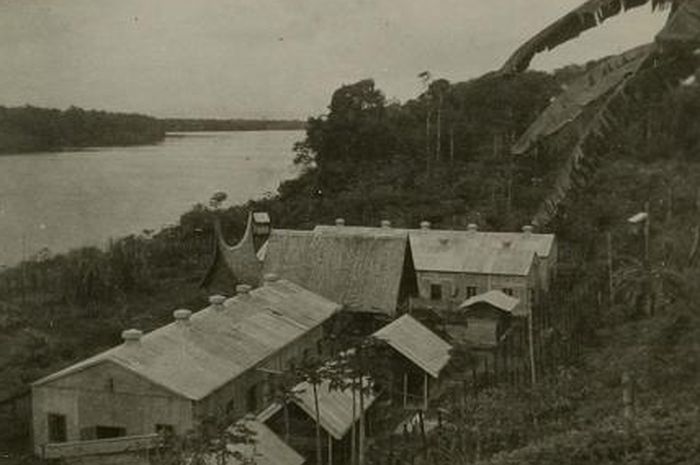
The first transport of internees and their families arrived at the site on February 1, 1927, marking the beginning of a grim era for the region. Located roughly 270 kilometers from Merauke, the climate of Boven Digoel proved to be oppressively humid with constant, heavy rainfall. The colonial government chose this specific location because its extreme isolation removed the need for expensive security fences or high walls. Thick, impenetrable jungles surrounded the camp, and the nearby rivers swarmed with crocodiles, making any attempt at escape a virtual suicide mission.
Nature acted as the most effective prison guard, as those who wandered into the interior risked death from tropical diseases or hostile encounters with local tribes. Historical records indicate that not a single escape attempt succeeded during the camp’s entire existence. Contact with the outside world remained a rare luxury, limited to a single supply ship that arrived once a month carrying censored mail. Inside the camp, the Dutch divided residents into various kampungs, labeled A through F, where they lived out a bizarre, forced version of “normal” life under the “Ethical Policy” of Governor-General De Graeff.
Intellectuals and Activists in Boven Digoel
Between 1927 and 1943, approximately 3,400 individuals lived through this anomaly of colonial justice. While the Dutch did not systematically execute prisoners like in European concentration camps, they left the internees to fend for themselves, which led to devastating physical and mental health crises. Two of the most famous figures held at Boven Digoel were the future Vice President Mohammad Hatta and the first Prime Minister Soetan Sjahrir. After Hatta leaked letters describing the brutal conditions to the public, the ensuing outcry forced the government to move the “intellectuals” to Banda Neira in 1936.
Other notable residents included the journalist and writer Marco Kartodikromo, who faced exile due to his long-standing political alliances. Paradoxically, the camp developed a strange cultural life as a survival mechanism. Prisoners established opera clubs, traditional Javanese and Sumatran performance groups, and even a jazz band named “Digoel Sneert.” A mosque, a school, and a theater for films and cabaret appeared in Kampung B, as the inmates adopted a mentality of making the best of a hopeless situation to preserve their sanity.
The Medical Obsession and the Heights of Tanah Tinggi
Health care at the site presented a strange irony, as the colonial government provided some of the best medical services in the East Indies. They sent top specialists in malaria and tropical diseases to the camp because the internees fell ill with alarming frequency. Every afternoon at 4:00 PM, police supervised a mandatory ritual where every prisoner swallowed quinine pills to combat the fever. While these pills saved lives, the long-term side effects often led to “quinine deafness,” leaving many prisoners with permanent sensory damage.
Beyond the main settlement of Tanah Merah, the authorities maintained a second, even more, isolated camp called Tanah Tinggi, located thirty-five kilometers further upstream. This high-altitude outpost served as a place of exile for the “irreconcilable” prisoners who refused to cooperate with the Dutch administration. Life in Tanah Tinggi featured even more dilapidated conditions and profound poverty compared to the main camp. The extreme isolation fueled internal conflicts among the prisoners, often sparking ethnic or political tensions that weighed heavily on their collective psyche.
The Closing Chapters of Boven Digoel
The camp remained operational until 1943, when the Dutch feared that advancing Japanese forces might liberate the remaining internees. Consequently, the administration evacuated the last few hundred prisoners to Australia. During the Indonesian War of Independence, some Dutch officials suggested reopening the facility, but the tide of history had already turned. By 1947, the Lieutenant Governor-General ordered the removal of the final twenty-four internees, effectively ending the camp’s role as a political prison.
Until the eventual transfer of Dutch New Guinea to Indonesia in 1962, the site transitioned into a quiet administrative town. Today, the wild jungle slowly consumes the remnants of the buildings, leaving only the echoes of those who suffered there. To reach the ruins of Tanah Tinggi today, one must travel by speedboat for an hour from the modern capital of Boven Digoel, navigating the same crocodile-infested waters that once terrified the exiles.
The Lingering Legacy of the Exile Lands
Physical traces of the colonial era are becoming scarce in the region, as the tropical environment erodes the foundations of old barracks. At Tanah Tinggi, a simple wooden house now stands with a Red and White Indonesian flag flying proudly in front of it, marking the territory as part of a sovereign nation. Visitors can still find a well that prisoners dug through forced labor, a stark reminder of the sweat and blood poured into the soil of the eastern archipelago.
Oen Bo Tik, a former political prisoner, once described the area as a silent wilderness, isolated from the world and human society. He noted that the true killer in the jungle was not the mosquitoes or the wild animals, but the crushing weight of boredom and uncertainty. This psychological torture eroded the sanity of many brilliant minds, turning the remote landscape of Boven Digoel into a valley of despair. While the forest may hide the physical ruins, the history of the camp remains a vital chapter in the story of Indonesia’s struggle for freedom.