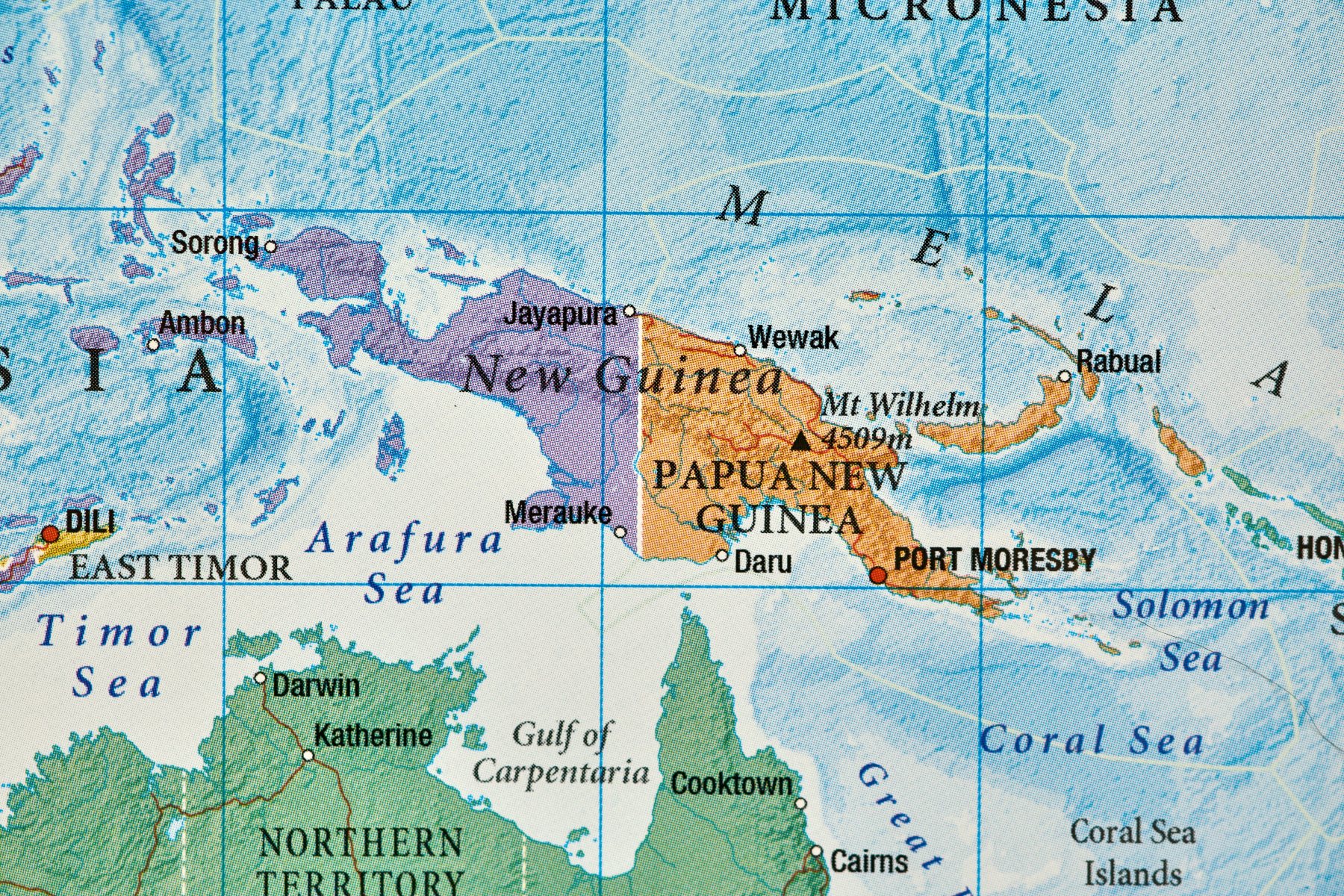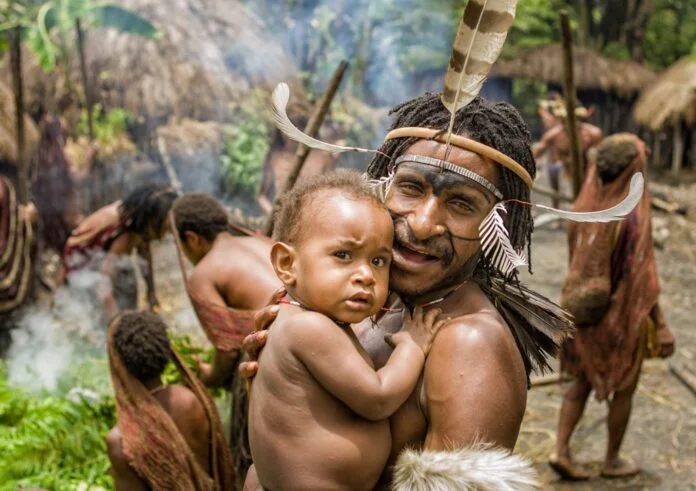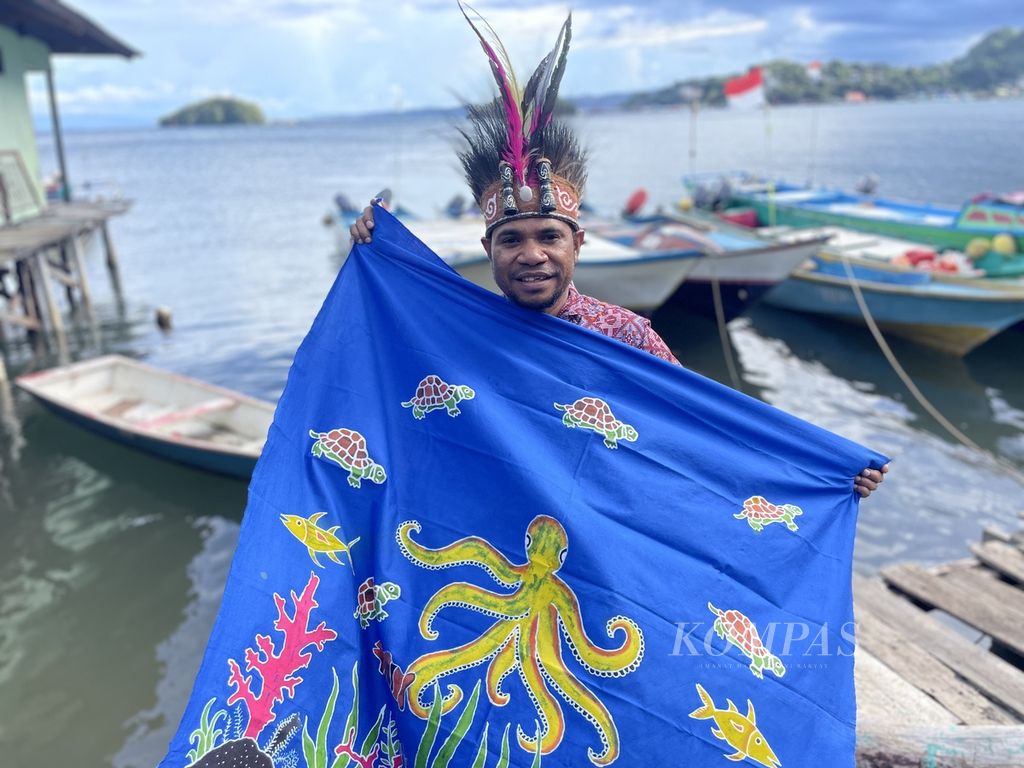
The indigenous communities of West Papua, Indonesia, possess a fascinating array of traditional West Papuan weapons. For generations, they have actively crafted and utilized these tools not only for hunting but also for self-protection. The uniqueness of these instruments shines through in their distinct forms and the natural, locally sourced materials used to create them. An exploration of these artifacts offers a deep insight into the culture and survival skills of the Papuan people. This article will delve into the various kinds of traditional West Papuan weapons, showcasing their history, function, and cultural significance.
Cuscus Bone Piercing Tool
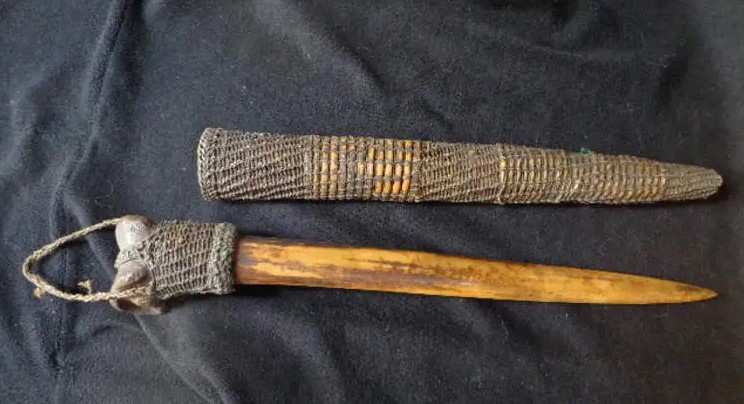
First, we explore the Cuscus Bone Piercing Tool. The Bauzi tribe, a semi-nomadic group in Papua, traditionally uses this sharp implement. The Bauzi people do not have a permanent settlement, instead building temporary homes from leaves and twigs gathered from the forest. They strategically establish their camps near rivers, which allows for easier relocation when local food sources become scarce. Consequently, the Bauzi construct simple houses that they can easily dismantle when they move.
The tribe still actively maintains the traditions of hunting and gathering. They alternate between these two survival methods to preserve the local ecosystem. The Bauzi people cultivate crops like sweet potatoes, bananas, or cassava in the forest. Before the harvest period arrives, the tribe hunts wild animals, catches fish, and sets traps for wild boars. For these hunts, they employ the cuscus bone piercing tool. This particular tool stands out as one of the most environmentally friendly traditional West Papuan weapons. Its creation process does not rely on industrial equipment that could pollute the environment. To craft this weapon, they first clean the cuscus bone, then meticulously sharpen it by repeatedly rubbing it against a whetstone until it reaches the desired sharpness.
Cassowary Bone Dagger
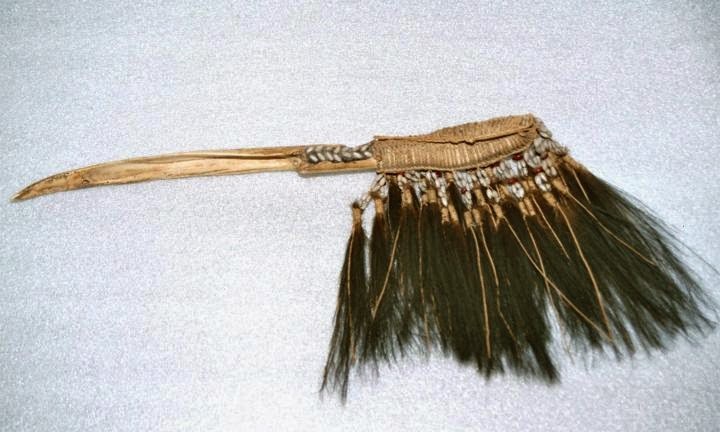
The Cassowary Bone Dagger features a unique design, often adorned with feather tassels on the handle, which is characteristic of Papuan culture. This traditional weapon serves to slice and cut during hunts in the dense jungle. Even when facing large mammals or crocodiles, the Papuan people adhere to their customs. A prominent custom forbids hunters from using any type of firearm during a hunt.
This Papuan dagger is made from a unique material that is difficult to find elsewhere: the bone of an endemic Papuan animal, the cassowary bird. The local culture skillfully transforms the cassowary’s strong leg bone into a highly effective tool. The handle of this impressive dagger also features the cassowary’s feathers, adding to its distinct appearance. The cassowary bone dagger is a formidable example of traditional West Papuan weapons.
See also: Types of Traditional West Papuan Clothing

Kalawai
The Kalawai is a traditional Papuan weapon that people have used for spearfishing since ancient times. Although it resembles a spear at first glance, the Kalawai has a different function. Fishermen primarily use it to catch fish, sea cucumbers, octopuses, and other marine life in shallow waters or during low tide. In contrast, a typical spear functions mainly for hunting animals in the forest and can also serve as a weapon in warfare.
Furthermore, while a spear usually has a single point, the Kalawai features a trident-like design with three prongs, and some versions even have four or five. The Kalawai, still in use today, has a handle made from bamboo or wood that is longer than a standard spear. The craftsmen securely attach multiple sharp iron points to the end, binding them in a circular pattern and sharpening them to a fine point. The term “Kalawai” itself originates from the Maluku language, where “Kala” means to stab and “Wai” means water. Therefore, Kalawai means a weapon used to stab animals in the water.
Papuan Machete
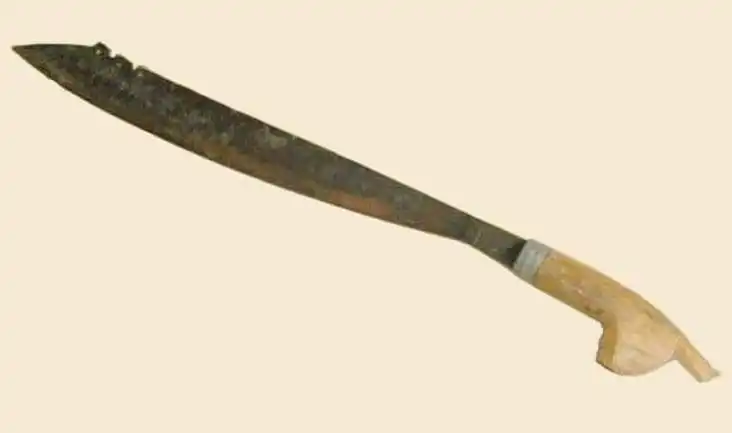
The Papuan Machete, locally known as “jalowy,” is another of the powerful traditional West Papuan weapons. It symbolizes the strength and resilience of a man within his family. The process of creating a Papuan machete is time-consuming. Craftsmen start by splitting a stone and then meticulously sharpening it to form a sharp blade. They then apply pig oil and pig blood before the final sharpening phase. This treatment is believed to increase the stone’s hardness and durability.
This versatile weapon has many uses. People use it for household chores, cooking, cutting meat, and felling sago palms. Beyond domestic applications, it also serves in agriculture and can even be part of a dowry when proposing marriage. Today, the machete is also a popular collector’s item for both foreign and local tourists who seek it as a decorative wall piece.
Badik
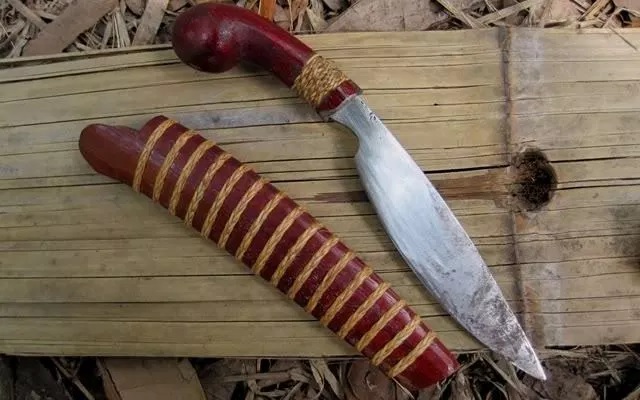
The Badik is originally a distinctive weapon of the Bugis people in Makassar, dating back to the era of the Sulawesi kingdoms. After the people of Papua began to interact with the outside world, the Badik was adopted and is now considered one of the traditional West Papuan weapons. It resembles a knife but possesses its own unique characteristics. A Badik with an engraving that looks like rice leaves is called Pamoro Leko Ase. People believe this specific design has the power to enrich crops if a farmer carries it while planting seeds.
See also: Types of West Papua Traditional Houses
Traditional Papuan Spear
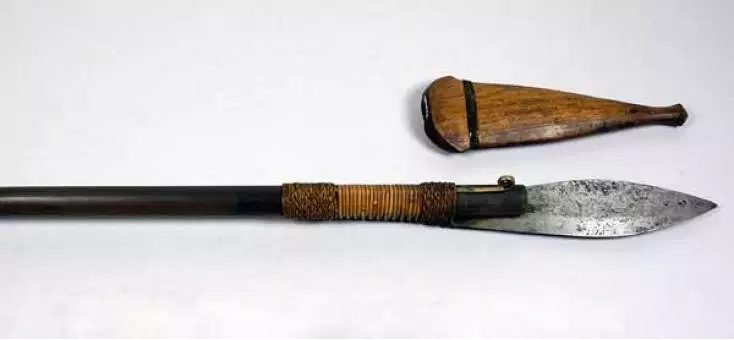
The Papuan spear, which the local community calls “Tul,” is a vital traditional weapon. They use this spear for both inter-tribal battles and hunting expeditions. Additionally, Papuan culture frequently incorporates the spear as a prop in traditional dances. Craftsmen create this weapon from materials readily available in nature, using wood for the shaft and sharpened stone or animal bone for the tip.
For this reason, the spear remains an essential hunting tool. What makes this weapon special is the strict rule that it must only be used for hunting or inter-tribal warfare. For instance, one must not cut young tree shoots or carry garden produce with the spear. Violating this rule is believed to bring misfortune. The spear is a cornerstone of traditional West Papuan weapons, symbolizing a man’s valor and strength.
Axe Stone
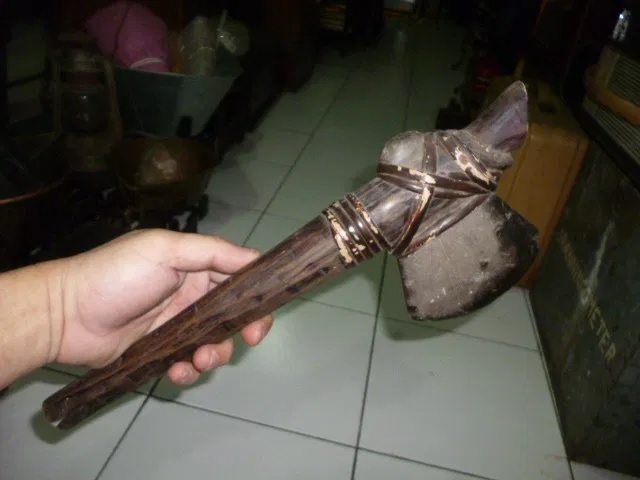
The Stone Axe, or “Jee Jugum,” is an iconic symbol of the Irian Jaya region, where many communities still use it in their daily activities. Assembling this traditional weapon is straightforward: a craftsman securely ties a shaped stone to a wooden handle. In the past, Papuan people used the stone axe to fell trees and process sago, though this practice has become less common due to its inefficiency. While its primary function was self-defense during tribal conflicts, the stone axe is now more commonly used for daily tasks like splitting firewood. Its flat, slim shape also makes it a useful tool for craftsmen peeling bark from logs used in home construction.
Papuan Bow and Arrow
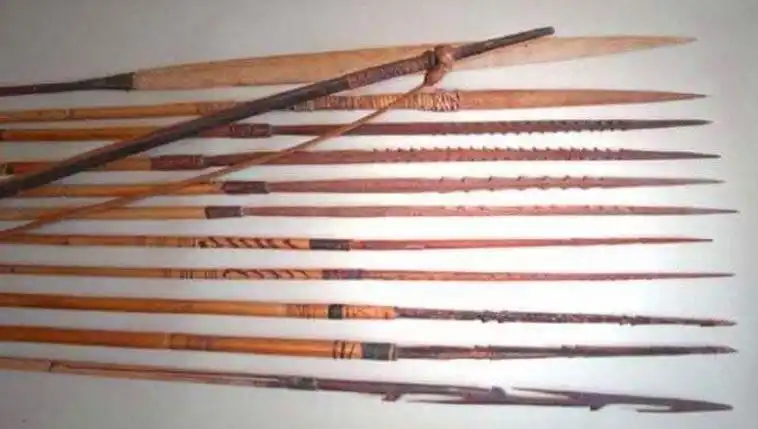
Finally, the bow and arrow are essential traditional West Papuan weapons, typically used for hunting wild boars and other animals. Warriors and hunters often carry the bow and arrow alongside a spear. While it serves for both hunting and warfare, the arrowhead material differs depending on the purpose. For hunting animals, the arrow has a bamboo tip. For warfare, the arrowhead is made from animal bone. In some parts of Papua, such as Irian Jaya and Wamena, the bow and arrow also function as decorative items in homes, reflecting a deep cultural appreciation for these tools.